That Christian Revival You’re Waiting For? It’s Happening

My Norwegian Artist husband was raised in a small church attached to a big denomination, and throughout his childhood he heard about the promised Revival, with a capital R, of God:

It was always about to happen, just on the verge of exploding. But for some reason, unless a big-name evangelist deigned to appear in a nearby large town’s football stadium, it just didn’t manifest itself.

Ocean Breeze inspirational original oil painting of woman at beach during sunset by Steve Henderson, licensed prints at icanvas, framed canvas art, great big canvas, amazon.com, art.com, and allposters.com

Liberation, acceptance, freedom, love — that’s what humans are seeking, and we will go where we can find it. Ocean Breeze, original oil painting by Steve Henderson, licensed prints at iCanvas, Framed Canvas Art, AllPosters, Art. com, Amazon, and Great Big Canvas.

Perhaps the saints weren’t praying hard enough. Or God just wasn’t ready yet. Whatever it was, the Revival was always something in the future.

Whatever a Revival is, however, we are in the midst something that looks like one now — an extremely quiet, persistent movement that mimics a leak in a water tank, drawing liquid away from the container and into the earth. And while this isn’t a good thing for the person owning the container, it does wonders for the parched ground receiving the moisture.

The Revival that we are experiencing today involves the leaving, one by one and family by family, of people from the conventional weekly church establishment. Too many people are simply leaving, disappointed and discouraged by the increasingly corporate nature of what calls itself the body of Christ, but convinced that this is, at base, what Christianity is.

“God, and Christianity, are not the answer,” they conclude.

But others, and I and my family are among them, have left to find God. Totally done with trying to fit in, wondering if there is more to the Christian experience than becoming the Deaconess of Baby Showers or the Deacon of Weekly Lawn Maintenance, we are exasperated at being labeled “difficult” for asking questions, “cold” because we are bored by Sunday School, “not an intentional member of the community” (is that in the Bible?) because went to the park with our family last Saturday, as opposed to participating in Church Work Day.

For whatever reason, and each person’s experience is different, more and more people are departing, which is why those who are left behind are exhorted, strongly, to stay there.

But weekly church service is not a commandment, “corporate worship” not a requirement to achieve closeness with God. And as important as “correct church doctrine” is trumpeted to be vital to maintain a healthy Christian community, one would have to ask, “So which doctrine is correct? Must we speak in tongues to prove that we have the Holy Spirit, or not? If we are not baptized, do we go to hell? Is it true that those who worship on Sunday violate God’s law, and isn’t the whole point of Jesus that we aren’t bound by that law anymore? So why are there so many rules?

“And will God really reject us if our neckline plunge is too steep, and too low?”

If “correct church doctrine” is in danger of being contravened by those who leave the conventional church environment, it would be nice if those concerned about its demise put forth a succinct and unified list of these appropriate beliefs so the rest of us would know when we are breaking them.

Better yet, let’s forgo that — it sounds too much like a one-world, global religion, and those of us who are ordinary know how well the globalized economy works for regular people. A One World Order mandating how we believe isn’t a particularly good, and certainly not God-ordained, idea.

People are leaving, people. It is not so much a reflection upon their belief in God as it is evidence that they have this belief, and they are not finding it strengthened, encouraged, nourished, and cultivated in the settings that they are abandoning.

While it’s easy to point to a Leaver and say, “That person has no heart for God; otherwise he would be here looking for him,” very few people, especially in leadership, actually ask former weekly church attenders why they left. The truth isn’t particularly complimentary to the status quo.

“Then you will call upon me and come and pray to me, and I will listen to you,” God says in Jeremiah 29:12-13.

“You will seek me and find me when you seek me with all your heart.”

That’s what people are doing. Some of them do it within what we call a church setting, and they thrive there. Others, however,  balk at what they consider a system, and insist that they didn’t follow Jesus to then be required to second guess, and follow, a list of rules — rules that vary depending upon the church body, the denomination, and whoever happens to be leading their particular group.

These are the people who are leaving. They are not weak, they are not backslidden, they are not apostates, they are not quarrelsome dissenters dissatisfied because they can’t find the perfect church — believe me, they know that such a thing doesn’t exist.

They are seekers — asking, seeking, knocking, walking, insistent upon finding the God of love and acceptance that they are told, repeatedly, exists and wants to have a relationship with them. And they’ll go where they can find Him.

Please read more on this subject at my Commonsense Christianity article at BeliefNet, The Christians Who Choose to Leave Church.


The Misfit Christian Book by Carolyn Henderson at amazon.com Live Happily on Less book by Carolyn Henderson at amazon.com Grammar Despair paperback and digital book at Amazon.com by Carolyn Henderson Step by Step Watercolor Success digital DVD workshop by Steve Henderson at Amazon.com

This post is linked to A Little R and R, Shine, Arabah Joy, Rebecca, Christian Mom Blogger, Create with Joy, Hearts for Home, Thought Provoking, Tell It Tuesdays, My Joy-Filled Life, Soul Survival, Motivate, Good Morning, A Look at the Book


Posted in Art, blogging, Christian, church, Current Events, Daily Life, Encouragement, Faith, Family, home, homeschooling, Life, Lifestyle, painting, Random, religion, self-improvement, spirituality, Uncategorized | Tagged , , , , , , , , | 14 Comments

The Perfect Will of God

The Perfect Will of God — have you heard of it?

While the Bible mentions God’s will, and that it’s perfect, the 21st century establishment definition of The Perfect Will of God really isn’t in the Bible, although many of us act as if it were so.

The Traveler inspirational charcoal drawing of vintage nostalgia woman in paris france by the Eiffel Tower by Steve Henderson

“Which way should we go?” is a question we ask ourselves all the time, but reading the guidebook helps. The Traveler, charcoal drawing by Steve Henderson.

In short, our misguided reasoning looks like this:

God has a perfect, individualized plan for our lives, and achieving it depends upon us. If we do not listen to His voice, perfectly (have you heard His voice, audibly, lately, giving you step-by-step instructions for your day? Me neither), then we will make wrong choices, thereby causing us to MISS the perfect will of God and muddle through some lesser form of what our life could have been.

Gosh, that sounds hopeful.

Through the years, I have watched good, godly people torment themselves in prayer over a decision — sometimes it’s a very small one — and essentially freeze in place because they’re so afraid of making the wrong choice.

“What does God want me to do?” they agonize. “And why won’t He tell me?”

“Why don’t you just choose the option that seems right to you?” I asked a woman once. “Neither option is a wrong one, neither one involves any form of moral compromise — which one do you want to do?”

“But it has nothing to do with my wanting anything!” she wailed. “It’s what God wants.”

But what God wants, and what He works toward creating, are grown-up children in the house of our Father, and as long as we remain as very little ones, never sure of our position, never putting to practical application the lessons that He has taught us, then we remain immature.

“I will instruct you and teach you in the way you should go,” we are told in Psalm 32:8-9, “I will counsel you and watch over you.

“Do not be like the horse or the mule, which have no understanding but must be controlled by bit and bridle or they will not come to you.”

God, in His grace, mercy, and love, works closely with His children, teaching us at our particular grade level, and then watches over us as we take faltering steps forward, then walk more firmly, and then run. Because we are not horses, we do not run away from Him, but run with Him at our side, guiding and encouraging us.

To give credit to horses, the smart ones stay close to their human master, having learned to trust him or her as their leader, and a perfectly matched pair — horse and rider — is a beautiful synergistic duo, each with a part to play.

And while it is true that God never messes up on His part but we do on ours, this does not mean that we do not take the part that He has given us — to live our life, review our choices, bring them to Him in prayer, and make a decision based upon what looks wisest and best to us, in light of what we know about God’s way of doing things.

To read more about this subject, please follow the link to my Commonsense Christianity article at BeliefNet, Are We Making Asses of Ourselves?

The Misfit Christian Book by Carolyn Henderson at amazon.com Live Happily on Less book by Carolyn Henderson at amazon.com Grammar Despair paperback and digital book at Amazon.com by Carolyn Henderson Step by Step Watercolor Success digital DVD workshop by Steve Henderson at Amazon.com


Posted in Art, blogging, Christian, church, Culture, Daily Life, devotional, Faith, Family, home, inspirational, Life, Lifestyle, painting, prayer, religion, spirituality, teaching | Tagged , , , , , , , , | 3 Comments

“Hello,” “Good-bye,” and “Jesus Loves You!”

I don’t know how you answer the phone, but generally I say, “Hello,” or “Good Morning (Afternoon, Evening).” Sometimes, when I do the Good Afternoon routine there’s a pause at the other end until someone timidly asks,

“Is this a business?”

Midday Tea, inspirational original oil painting of nostalgia 1930s woman in victorian dining room by Steve Henderson

Greetings and salutations are important, and they set the tone for the subsequent conversation. Midday Tea, original oil painting by Steve Henderson.

But most of the time, people respond favorably, and then say “Hello,” or “Good Morning” back, and we move on with the conversation.

So I was a bit non-plussed recently when I called someone and they answered, “God Bless You!”

Honestly, I hadn’t sneezed. And I wasn’t quite sure how to proceed — do I say, “Um, Well God Bless You to You Too!” or would “Hello” do? The latter seems lame, somehow, but it’s pretty much the default that came to me after a pause on my part long enough to become embarrassing.

In another conversation, with another person, and in person, the interaction ended with, not “See you later,” or, “Good-bye,” but my favorite phrase to NOT be used as a greeting or departure, “Jesus LOVES You!”

This one always flummoxes me. I mean, as a Christian, I KNOW that Jesus loves me, and when people toss it off as a salutation or valediction, I never know whether they are informing me of the fact — convinced that I don’t know it — or reminding me, because I’ve forgotten somehow — or trying to convert me, because I come across as a heathen — or not caring at all what my spiritual state is because what matters is to get the name of Jesus in there somehow, regardless of what the listener thinks. If I didn’t know Jesus, and indeed, if my experience with Him through the people who profess Him were not especially positive, how would “Jesus Loves You!” come across?

In 1 Corinthians 9:19-23, the apostle Paul talks about how he adjusts his behavior, speech, and words in accordance with the person to whom he is talking — to a Jew he becomes as a Jew, to a person not under the law as a person not under the law, in short, becoming “all things to all men so that by all possible means I might save some.”

An intelligent and knowledgeable man, Paul was also wise, a crucial element that allows us to use whatever intelligence and knowledge we have been given, and he realized that the message of Christ, and God’s love, is so important, that it’s worth thinking about how we give it.

In the same way that it does little good to a Greek to call upon Jewish law, it’s meaningless to an atheist, or an agnostic, to be quoted Scripture. And if our intent and hope is to show God’s love to those people who don’t know or understand it, wouldn’t it be wise to consider how our words and actions impact others, before we say or do them? (And as an aside, when we are interacting with total strangers, automatically assuming that they are not Christian, or that they do not care about God at all, is rather offensive.)

Now of course, we can get paranoid about this, and we do, in our culture (it’s called political correctness), parsing words to such a point that we say nothing because we’re so afraid of offending. So it doesn’t mean that we eliminate the words “God,” “Jesus,” and “The Lord,” from our vocabulary, but it does mean that we 1) don’t used them in the place of punctuation, and 2) are not obligated to insert them in an unnatural fashion in our speech (“Praise JESUS that these socks are on sale!”)

The message is crucial, and it’s a good one: Jesus DOES love us, but many people have heard the words so often, words not sufficiently backed by action to be believable, that the sentence becomes meaningless.

Not a good thing.

To read more on this subject, please click the link to my Commonsense Christianity article at BeliefNet, Please, Think Twice about Passing out the Bible Tract.

The Misfit Christian Book by Carolyn Henderson at amazon.com Live Happily on Less book by Carolyn Henderson at amazon.com Grammar Despair paperback and digital book at Amazon.com by Carolyn Henderson Step by Step Watercolor Success digital DVD workshop by Steve Henderson at Amazon.com

Posted in Art, blogging, Christian, Culture, Current Events, Encouragement, Faith, Family, fine art, home, Humor, inspirational, Life, Lifestyle, painting, Relationships, religion | Tagged , , , , , | 2 Comments

Desperately Trying to Fit in

I spent far too much time, as a child, desperately trying to fit in.

It’s understandable, given that our school system — like our corporate office culture — is designed to homogenize people, reducing everyone’s individuality to a standardization of “average” that really approaches mediocre. Basically, we want people to just be quiet and do what they’re told, and some of the best enforcers of this mandate are our peers, which is why we are all intimately acquainted with the term, “peer pressure.”

Lady in Waiting inspirational original oil painting of woman by lilac sea and Victorian home by Steve Henderson, licensed prints at amazon.com, icanvas, and framed canvas art

We all undergo a time of waiting for somebody to join us; it’s worth making sure that the Somebody we’re waiting for is worth that wait. Lady in Waiting, art print from Steve Henderson Collections.

Naively, I thought that once I grew up everything would be different — but how could it be? When we are trained from toddlerhood to conform, at what point will we break away from this culture and finally follow the narrow, individual path set before each one of us? It’s so much easier, and far more accepted, to stay on the wide road with everyone else — keeping up so that we are not ridiculed for being behind, but not so far ahead that we are labeled “overachievers.”

When I discovered Christianity and slotted myself into a church, I thought, “NOW I will find complete acceptance,” but as many of you have learned as well, too many Christian groups are just that — groups — and the same issues that plague lonely children on the playground affect them as adults, in the pews.

This is why I love the words uttered by Ruth, the Moabitess, to her mother-in-law, Naomi, when the latter decides to return to her homeland, Bethlehem in Judah, after the death of Naomi’s husband and two sons, one of whom was Ruth’s husband.

Naomi, knowing that Ruth as a foreigner, outsider, and Moabitess to boot, will not be remotely welcomed in the land of Israel, urges her to stay in her own country, among her own people and within her own culture, where she will find as much acceptance as humans generally do find among one another. (As a side note, it would be interesting to know how well accepted Naomi had felt in Moab . . . I am reminded of many statements I have heard and read along the lines of, “I felt more welcome around ‘sinners’ than I did at church.”)

But Ruth answers:

“Don’t urge me to leave you or to turn back from you.

“Where you go I will go, and where you stay I will stay. Your people will be my people and your God my God. Where you die I will die, and there I will be buried.” (Ruth 1:16-17)

Ruth’s words, while they are brave, noble, and loyal, are backed not by the virtue of Ruth, but by the love of Naomi. It was because of Naomi’s love for her that Ruth made this overture, and that love must have been great indeed when it superseded the pull of Ruth’s own culture: consider this — she felt more comfortable in a setting where she was considered an outsider than she did in the country where she belonged.

It was Naomi’s love, her unconditional acceptance of her daughter-in-law, that drew Ruth forward, and this love was so strong that it supported Ruth through the ramifications of this decision.

From this, we can draw two important thoughts:

1) Naomi is an example to us of what it looks like to accept other people, regardless of their culture, the way they dress, the manner in which they dress, their lifestyle. Naomi saw Ruth not as a Moabitess, but as her daughter,

and

2) Naomi is a shadowy image of the real thing, Christ Himself, whose unconditional love for us, His children, enables us to live within a school system, an office, a workplace, a church, where we do not feel this acceptance because somehow, in some uncomfortable way, we’re just too “different.”

We’re all different, you know. That’s how He made us. And He loves us, each of His precious, beautiful creations — all foreigners, but all welcome in His household.

The Misfit Christian Book by Carolyn Henderson at amazon.com Live Happily on Less book by Carolyn Henderson at amazon.com Grammar Despair paperback and digital book at Amazon.com by Carolyn Henderson


Posted in acceptance, Art, blogging, Christian, Culture, Current Events, Daily Life, devotional, Encouragement, Faith, Family, fine art, home, inspirational, Life, Lifestyle, painting, Relationships, religion | Tagged , , , , , | 3 Comments

Christians: We Are Family, Not Employees

Once a month or so I pass by this church with a dreadful LED sign:

“COME TO ME!”

it blares in red,

“AND I WILL GIVE YOU REST!

“MORNING WORSHIP SERVICE 11:00 A.M.

Light in the Forest inspirational original oil painting of two women with candles in woods and Celtic overtones by Steve Henderson licensed prints at iCanvasART Framed Canvas Art and Amazon.com

Christianity is a relationship between human beings, and between children and our heavenly Father; so why do we talk like businessmen? Light in the Forest, original oil painting by Steve Henderson; licensed prints at iCanvas, Framed Canvas Art, and Amazon.

“ADULT & CHLDRNS STUDYTIME 9:30 A.M.”

For some reason, I’m never tempted. I feel as if I am being sold something, somehow, which isn’t surprising since signs like this often have messages like,

“10% OFF TODAY ONLY

“BUY ANOTHER ONE OF OUR PRODUCTS NOW!”

And while the LED sign is no doubt an improvement over something with Pepsi or Coca Cola on it, it is still a disturbing reminder that this is the modern world we live in, and this is what it looks like.

“We need to be part of this world,” I remember hearing in the days we attended church.

“When families come in and they don’t see the latest technology, they’ll leave, so we as Christians have to be on top of it all.”

Actually, in our days of attending church, the first thing we noticed upon entering a new congregation was whether or not we felt welcomed — and not just the initial greeting at the door when the bulletin was thrust into our hand, but from beginning to end.

We watched the people to see how, or if, they interacted with one another, and the more informal and relaxed the atmosphere, the better we liked it. We were looking for a church family, after all, not a corporate environment.

As time went on, however, the corporate environment, and the concern that the church run smoothly, efficiently, and more like a business, became more prominent, until the day came that we realized it was enough to work in an office and be treated like an unimportant employee five days a week, and we didn’t need an extra day added, on Sunday, to remind us that we were controlled, instructed, circumscribed, managed, and asked to do extra work, for the “family,” or the “community,” or the “team.”

The church — the true one that Christ is the bridegroom of — is supposed to look, and act, different from the world around it, but when the church — the one run by men and denominations and councils and religious celebrities and the mass media Christian sub-culture — looks and sounds like a business, then we have to ask ourselves what Christianity is coming to these days.

What is the real thing, and what is the cultural, corporate substitute?

Please read more on this subject at my Commonsense Christianity, BeliefNet article, Contemporary Corporate Christianity.

The Misfit Christian Book by Carolyn Henderson at amazon.com Live Happily on Less book by Carolyn Henderson at amazon.com Grammar Despair paperback and digital book at Amazon.com by Carolyn Henderson Step by Step Watercolor Success digital DVD workshop by Steve Henderson at Amazon.com

Posted in Art, blogging, Christian, church, Culture, Current Events, Daily Life, devotional, Encouragement, Faith, Family, fine art, Growth, home, inspirational, Job, Life, Lifestyle, mass media, Personal, Relationships, religion, spirituality | Tagged , , , , | Leave a comment

The Lies We’re Told

Deception is fascinating.

At base, deception is simply lying, which doesn’t sound so mysterious and awesome, but truly good deception is done in such a way that the people accepting the lies, think that they are believing the truth.

Contemplation inspirational original oil painting of young woman in autumn looking at leaf by Steve Henderson licensed prints at Great Big Canvas, iCanvas, Framed Canvas Art, amazon.com, art.com, and allposters

We need to take time, slow down, and review what we are being told. Is it true? Contemplation, art print from Steve Henderson Collections.

Deception is at the base of pretty much everything we do in our culture. Years ago, a friend of ours in advertising told us that he was leaving the business and finding something else to do because, as he said,

“The whole purpose of my job is to convince people that they want something that they don’t need. A successful day for me is when I encourage someone, who was initially content with their life, to be dissatisfied about their car, or their phone, or the way they look.

“My purpose is to convince people that their life isn’t good enough.”

Many of us, when we watch a commercial, or encounter an ad in a magazine, are aware that we are being prodded to buy something. Often, we even realize that the impression we’re being given isn’t necessarily true — seriously, that movie star uses that particular brand of toothpaste?

But even though we recognize that what we’re being told is probably not true, too few of us actually act upon this thought, and instead, buy the toothpaste, or vote for the guy that says he’ll lower taxes, or truly believe that the bond money will be used to fix the city streets.

And then when it turns out to be not true, we act 1) surprised and 2) guilty because if someone tells us a lie and we believe it, it’s our fault somehow.

We accept deception as a normal part of human existence, which to some extent it is — deception has been with us since Eve fell for the serpent’s lie in the garden — but accepting and embracing are two things.

A wise person acknowledges that deception exists and men lie, and tends to not believe everything he is told in person, on the news, at the movies, or by politicians. Quite frankly, based upon this criteria, there aren’t a lot of wise people in the world.

Those who should be wise — Christians who turn to God for guidance and truth — are not as many as one would hope because, for some reason or another, too many people who call themselves Christians in this society place more importance upon the authority of man — their pastor, Christian leaders, government officials, anybody who wears a uniform, and talk show hosts who promote “family values” — than they do upon the actual words and teaching of God.

There is quite a difference between the two, you know.


Posted in Art, blogging, Christian, Culture, Current Events, Daily Life, Faith, Family, home, Life, Lifestyle, media, money, News, religion, self-improvement, simple living, success | Tagged , , , | 2 Comments

Inside, We’re All Beautiful

The story of The Girl in the Copper Dress (3), original oil painting and licensed print by Steve Henderson at Start Your Week with Steve:

She is a dancer.

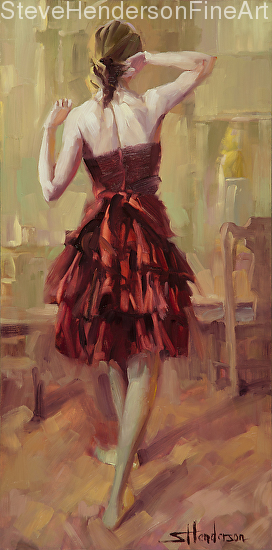
Girl in a Copper Dress 3 inspirational original painting of dancer woman by Steve Henderson, licensed prints at allposters, art.com, Great Big Canvas and iCanvas

Mentally, we see ourselves differently than those do on the outside; but that mental image ultimately affects how we walk, stand, and behave. Girl in a Copper Dress 3, original oil painting by Steve Henderson; licensed prints at Art.com, AllPosters, iCanvas, and Great Big Canvas

Lithe, graceful, comely, The Girl in a Copper Dress turns every move into an expression of choreography, and while she is not performing for an audience, she is, in her imagination, dancing with a smooth lissomeness which brings beauty to every move.

A vague, yet visionary background tells the viewer that the girl is inside, no doubt at home, because though she is dressed for an evening out, her feet are bare, as if the time to leave has not yet come.

She is in a state of relaxed, dreamy calm — one in which we as viewers rest — because a state of relaxed, dreamy calm is a good one in which to be.

Regardless of what a person looks like, how old they are, or whether or not they could or actually want to fit into that dress, all humans, in their minds, are different from the person those on the outside see. Mentally, people segue through life seamlessly, efficiently or gracefully, boldly or gently — but like a dancer, they move professionally through their space.

On the physical plain, people often don’t feel like this at all, stumbling through the day and hoping that they don’t cause too much damage before the end of it, but deep down, in every human, is the view that there is something about them that is graceful, that is mysterious, that is honorable and worthy and beautiful.

Like The Girl in the Copper Dress, people may indulge in this feeling privately, within their homes, when no one is watching, because it is such a vulnerable secret that they can’t entrust it to the world around them. But the very belief that something noble about them exists enables each human being to stand taller, walk straighter, and go through their day like a dancer.

The Girl in a Copper Dress 3 is one of a series of original paintings which may be purchased separately or as a unit of all three paintings, with a 20 percent discount. You may find The Girl in a Copper Dress 2 and The Girl in a Copper Dress 1 at the Steve Henderson Fine Art website.

The works are also available as licensed prints at Great Big Canvas, iCanvas, Framed Canvas Art, Art.com, Amazon.com, and AllPosters.

The Misfit Christian Book by Carolyn Henderson at amazon.com Live Happily on Less book by Carolyn Henderson at amazon.com Grammar Despair paperback and digital book at Amazon.com by Carolyn Henderson Step by Step Watercolor Success digital DVD workshop by Steve Henderson at Amazon.com

Posted in Art, Beauty, blogging, Current Events, Daily Life, Encouragement, Family, fashion, home, inspirational, interior decorating, Life, Lifestyle, newsletter, simple living | Tagged , , , | Leave a comment

Does It Matter, The Clothes We Wear?

There’s something about three-piece suits that seems so civilized. Think of the average James Bond movie, in which all sorts of people are shot and blown up — the bad guys, that is — and James remains unruffled, dignified, and full of aplomb. He performs so many physically grueling acts, outside of the bedroom, that is, while wearing a neatly pressed suit.

And while we know it’s “just a movie,” and doesn’t represent real life and all that, if we seriously look at the number of atrocious acts that assault us during the average 2 hour mass media flick, featuring an exciting anti-hero in a suit, we start to wonder just how inured we are to violence, and deceit, and treachery, and cruelty, and meanness.

The New Hat inspirational original oil painting of woman in victorian home before mirror by Steve Henderson

It’s not clothes that make the man, or woman — it’s who we are inside, and how we choose to behave, that makes us who we are. The New Hat, original oil painting by Steve Henderson.

It’s all so well-hidden behind the facade of a three-piece suit, which is so very, very civilized.

From the standpoint of the person who has been hurt, however, it doesn’t really matter if the perpetrator is in a suit or animal skins — if we are robbed of $800 by a stereotypical thug in a sweatshirt brandishing a gun, or if the thief is behind a computer and hits a few keys, what is the difference, ultimately, to the person who used to have the $800?

And while facing a gun is scary, being violated in secret is kind of . . . creepy.

Evil stays the same, although it changes its face, or more likely its clothes, and the pervading evil of mankind is its refusal to acknowledge God and to depend, instead, upon its strength, cunning, intelligence, acumen, and ambitious greed.

Habakkuk 2:11 describes men such as this, men who,

” . . . sweep past like the wind and go on — guilty men, whose own strength is their god.”

The people referred to in this passage are the Babylonians, a major military, fiscal, corporate, and social phenomenon of their age, the 7th and 6th centuries, B.C. While we easily discount them, these days, because they wore robes and didn’t carry smart phones, the Babylonians were THE major power of their day, and their cunning, wit, acumen, and ruthlessness would match any nefarious power of 21st century, regardless of who is wearing a suit, robe, or t-shirt.

We fool ourselves when we think that today’s technology makes us smarter than men of old, and by thinking so, we lose the lessons that history has to teach us, which is this:

1) Mankind, from the beginning, has relied upon itself, and not God’s standards, to rule itself (which means that only a few rule, and the rest are ruled),

and

2) God’s standards, not man’s, are the only ones made with the safety and protection of God’s children in mind.

When we worship ourselves — relying upon our own strength as opposed to that of God’s — we create a world in which the weak, the defenseless, the poor, and the vulnerable are in a bad place, because it is not in the nature of humans, seeking power, to take on the cause of the weak.

But when we worship God — relying upon His strength as opposed to that of man’s — we ally ourselves with the One and Only Person who does take on the cause of the weak. When it comes to a showdown between two rival powers — and there is always a showdown — it’s a better idea to be on the side, and under the protection, of the One who, ultimately, holds ALL the power.

To read more on this subject, please follow the link to my Commonsense Christianity blog at BeliefNet, When Our Strength Is Our God.

The Misfit Christian Book by Carolyn Henderson at amazon.com Live Happily on Less book by Carolyn Henderson at amazon.com Grammar Despair paperback and digital book at Amazon.com by Carolyn Henderson Step by Step Watercolor Success digital DVD workshop by Steve Henderson at Amazon.com


Posted in Art, blogging, Christian, Culture, Current Events, Daily Life, devotional, Faith, Family, fine art, home, homeschooling, Life, Lifestyle, media, Politics, religion, spirituality, Uncategorized | Tagged , , , , , , | Leave a comment

The Lies We’re Told

It’s no surprise that we’re lied to all the time. Anyone who follows politics in any manner at all readily acknowledges that politicians lie.

And businessmen lie.

And mass media magnates lie.

And iconic religious celebrities lie.

Field of Dreams inspirational original oil painting of flowers in rural country meadow by Steve Henderson, licensed prints at Framed Canvas Art

The interesting thing about evil-minded people is that their dominion does not last forever, and their lives are as brief as that of the flowers of the field. Thank God. Field of Dreams, original oil painting by Steve Henderson; licensed print at Framed Canvas Art.

All sorts of people lie, and this, again, is no surprise to us.

What is a surprise, or a shame, actually, is that we so readily accept lying as a reality of our culture that we don’t get disturbed by it, and indeed, phrases like caveat emptor (“Let the buyer beware”) speak volumes about our attitude regarding deceit, deception, misinformation, disinformation, and lying:

“Oh well,” we shrug. “If you’re dumb enough to believe what you’re told, then it’s your own fault if you get cheated.”

It’s no accident that this Latin phrase comes to us from the Romans, upon which we base our governmental system which we call a democracy, but is no more of a democracy than the republic, and later empire, of Rome. This latter is the place, after all, that worked seamlessly with the Jewish leaders to bring about the crucifixion of Christ.

“But we are a Christian nation!” people insist upon saying, although where they get this is a bit of a mystery. No doubt from the history they were taught which . . . they accept as gospel truth because it was given to them in a high school textbook.

But back to lying, which we haven’t really left:

We are lied to all the time, and rather than roll our eyes and cynically accept that this is the way life is, and savvy people recognize, embrace, and work with this system, maybe we should nod our heads, yes, and fully understand that we live in a world of lies and need to be aware of their existence.

And then, rather than play with the system, because that’s the way you get ahead in the world of men, maybe we as Christians should go a step further, be smart about it all, and stop believing the lies.

“There are six things the Lord hates, seven that are detestable to him,” Proverbs 6:16-19 says:

“Haughty eyes, a lying tongue, hands that shed innocent blood, a heart that devises wicked schemes, feet that are quick to rush into evil, a false witness who pours out lies, and a man who stirs up dissension among brothers.”

Offhand, this list sounds like it encompasses our political system, educational establishments, corporations, the industrial military complex, financial institutions, the religious arena, mass media, agribusiness, the entertainment industry, insurance companies, slick advertising campaigns, and the legal system — in short, any and every area in which man asserts his dominion.

And while not every person, in each of these areas, is lying, it’s a given that the central message, from the top voices, might need to be looked into carefully before any sense of credence is given to it.

We’re called to be wise as serpents, innocent as doves.

Not the other way around.

Please read more about this topic in my Commonsense Christianity article at BeliefNet, Does It Bother You, That People Lie to Us?

The Misfit Christian Book by Carolyn Henderson at amazon.com Live Happily on Less book by Carolyn Henderson at amazon.com Grammar Despair paperback and digital book at Amazon.com by Carolyn Henderson Step by Step Watercolor Success digital DVD workshop by Steve Henderson at Amazon.com

Posted in Art, blogging, Christian, church, Culture, Current Events, Daily Life, decor, devotional, Faith, Family, fine art, home, inspirational, Life, Lifestyle, media, money, painting, Politics, spirituality | Tagged , , , , , | Leave a comment

Blind Obedience

Years ago, a woman proudly described to me what her husband had said about her:

“He said I was very strong-willed,” she commented, “and that I needed to be more obedient.”

After figuring out that she wasn’t referring to the family dog, I commented,

“But aren’t you partners in life?”

“Oh, no,” she replied. “He’s the man of the house and the leader. It’s my job to obey him.”

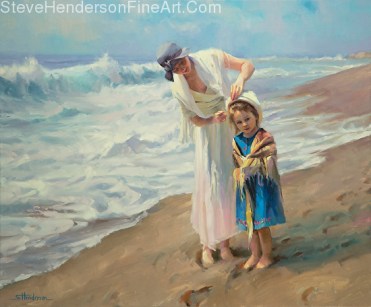
Beachside Diversions inspirational original oil painting of woman on seaside ocean beach with child by Steve Henderson, licensed prints at amazon.com, art.com, allposters.com, Framed Canvas Art, and Great Big Canvas

Children are expected to obey lots of people, but the idea is that they are gently and wisely treated, not abused, and most certainly not fleeced. Beachside Diversions, original oil painting by Steve Henderson; licensed prints at Great Big Canvas, art.com, amazon.com, framed canvas art, and allposters

Now this essay is less about the Proverbs 31 woman, or the Titus 2:3-5 woman, or the Ephesians 5:22 woman, all passages misguidedly used to keep half the world population quiet and complaisant, as it is the extension of this attitude to anyone who calls himself (or herself) a Christian, yet is not a Leader.

“Obey your leaders and submit to their authority,” Hebrews 13:17 is used to bring to submission anyone who asks too many questions, is reluctant to do what they’re told, or wonders about the direction that their church, and church leadership, is taking.

But the Apostle Paul had a few things to say about leadership, and in Acts 20:29-30 he called together the elders of the church in Ephesus and warned them,

“I know that after I leave, savage wolves will come in among you and will not spare the flock. Even from your own number men will arise and distort the truth in order to draw away disciples after them.”

One of the keynote elements of this passage is the, “even from your own number,” part, which strongly implies — explicitly states, actually — that the central danger to Christian teaching and the sheep who seek protection from those who are supposed to be leading them, comes not from the government, not from a greedy corporate society that cripples families with usury, not from educational and entertainment industries that tear down any belief in or respect for morality, goodness, honesty, and God, but from the very people who say they are the shepherds.

So for this reason, it is wise for anyone who chooses to follow a human leader to 1) make sure that this leader is worthy of being followed and 2) if the answer to number 1 is yes, then to watch just how far and how obediently he chooses to follow that person. It’s not bad to keep in mind that, the more money the person makes and the more power he wields, the greater number of people he needs to support his infrastructure. While this doesn’t completely exonerate the simple country parson, it does divert suspicion to the more likely of the two to be misusing his position.

Blind obedience is not an option, and indeed, in its very description — Blind. Obedience. — highlights the problem: people who obey without thinking become a member of the masses, a malleable, easily controlled unit of humanity which enable evildoers — whether they are in religious or secular arenas — to inflict a whole lot of damage on the planet.

So they have done, through history, and so they continue to do, and when Christians, under the belief that they are required to obey whoever is set over them, do not stand up, do not speak out, do not ask for an accounting of rectitude from those who say they are deserving of other people’s submission, then we walk away from the poor, the defenseless, and the weak — the very people we as Christians are to love, protect, and serve.

Please read more on this topic at my Commonsense Christianity article at BeliefNet, Why Do We Follow These Leaders?

The Misfit Christian Book by Carolyn Henderson at amazon.com Live Happily on Less book by Carolyn Henderson at amazon.com Grammar Despair paperback and digital book at Amazon.com by Carolyn Henderson Step by Step Watercolor Success digital DVD workshop by Steve Henderson at Amazon.com

Posted in Art, blogging, Christian, church, Culture, Current Events, Daily Life, devotional, Encouragement, Faith, Family, fine art, home, inspirational, Life, Lifestyle, painting, Relationships, religion, simple living, spirituality | Tagged , , , | 1 Comment