Why Your Life on This Planet Means Something

All human beings like to feel that we have a reason for existing. It’s not narcissistic: created in the image of a creative God, we have it in us — in our genes, in our DNA, in our soul, in our being — to use the limited number of years we live on this earth, meaningfully.

On the Beach inspirational original oil painting of people on ocean coast by Steve Henderson

It’s easy to feel very small and unimportant — but our God is big, and we are important to Him. On the Beach, art print from Steve Henderson Collections.

Some people, who don’t know God or aren’t particularly interested in Him, set their sights toward creating empires and dynasties of their own: financial, political, or religious, and we’re really not concerned with these parasites, sucking the lifeblood from others. Their portion, as Psalm 17:14 says, is in this life, and true to the nature of man, they need to steal from other people’s portion, because what they have is never enough.

As ordinary people, one of the most dominating and pervasive messages we hear is that we — the “masses” which make up the bulk of the planet — can’t really do much of import, but best spend our time and money by vicariously living through movies, TV, and other entertainment; buy buy buying the products that are advertised therein; pretending to engage in the process of governing ourselves by casting a vote, and, when dealing with those who employ religious terminology in their empire building, sending money so that they can “do the work of the Lord.”

More Than Money

But in willingly submitting ourselves to these people, we eclipse the good things that we are given to do, resigned to the depressing notion that most of us don’t perform “God’s work,” but rather, struggle to meet our taxation, inflation, and mandated insurance obligations by working “just a job,” during which time, we are told, millions and billions of souls are heading straight for hell because Evangelist A and Ministry B do not have enough funds to reach the world for Christ.

Fenceline Encounter inspirational original oil painting of goat and deer in meadow by Steve Henderson

Personally, I like goats — they’re funny, individualistic, and independent — traits that aren’t such a bad thing in humans, either. Fenceline Encounter, original oil painting by Steve Henderson, sold

Just send a check, please. Or better yet, set up a monthly payment via PayPal, credit card, or your bank account. And then go do your useless job. That is, if you have one.

As children of God, we have hope in Jesus far exceeding what we are taught from the pulpit, on TV, through books, in advertisements, or via Facebook memes that purport to be written by “ordinary people.” One of these hopeful messages is in Matthew 25:31-46, which tells the story of the sheep and the goats.

Now evangelical Christians are traditionally taught that this is a separation of those who pass Go and collect a heavenly inheritance and those who are cast into the eternal lake of fire, based upon that peculiar twisting of verses that the establishment has crafted to a state of perfection: to wit, the criteria for who goes where hangs upon a heavenly Billy Graham crusade: “Who made ‘a decision for Jesus’? You? Okay, you’re a sheep. Who left the show without debasing themselves before thousands of people, got in a car accident before they made it home, and no longer can make this choice? You? Okay, you’re a goat. Off to hell you go.”

But if we read the passage, without helpful promptings from celebrity Christian leaders, we see that there is no basis for reciting the Four Spiritual Laws (another man made creation, by the way; the word “Law” figuring prominently in its title).

Everyday Activity

The criteria for the separation of sheep from the goats is mundane, similar to the impression we are given of our lives:

“For I was hungry and you gave me something to eat, I was thirsty and you gave me something to drink, I was a stranger and you invited me in, I needed clothes and you clothed me, I was sick and you looked after me, I was in prison and you came to visit me.”

If we know someone in prison, it’s probably not a prominent political figure, temporarily fallen from grace, who will later start an important ministry. More likely, it’s our neighbor’s son, a n’er-do’well who’s always been in trouble and deserves what he got. He’s just a loser.

Well, if we’ve got that attitude, it’s best to stay away, but if we can humble ourselves because we don’t know the whole story, we could bring him by a book (not a religious one, please), or just drop in on his mom and share a cup of tea. She probably feels like a pariah.

Hungry people? Yes, there are food stamps, as the conservative media voice brays (not much difference, really, between a donkey and an elephant), and we’re supposed to look down on those horrible people who abuse the system, without ever asking ourselves just why that system is so easy to abuse, anyway. Are government planners THAT stupid?

Many people are hungry, but they’re too proud to say so. It’s debasing, dealing with the welfare system. Those who do walk out the door with an EBT card may eat the way they do for the same reason that the wealthy elite eats the way it does: they don’t know how to cook. Would it damage us so much to give the guy with the cardboard sign a banana? Or hand $5 to the obviously embarrassed woman in the shopping line ahead of us, who is delaying everybody by looking through her purse for $3.67?

Sure, they may or may not be frauds, but we give our money to frauds all the time. They just don’t look like individual people.

It is simple, and difficult, to do what Christ is talking about: simple, because it’s really not asking that much; difficult, because, yes, we could be cheated, and yes, sometimes people get into problems of their own making. (We all do that, and breathe a sigh of relief when others don’t find out.)

Everyone of us ordinary, regular people has neighbors, friends, acquaintances, family, total strangers we run into — precious people with problems, unnoticed and untargeted for “help” by the mega-associations and government programs and non-profit groups and ministries and philanthropists that often do little more than give the illusion of doing the work that God gave us — just ordinary people — the ability, power, and grace to do.

Come, let us focus upon “the least of these brothers of mine,” as Jesus puts it. It’s the most meaningful work there is.

Thank You

Thank you for joining me at This Woman Writes. I am an ordinary person, writing to and for ordinary people, trying to open our eyes to our value and worth.

Posts complementing this article are

It’s Time to Change Our Minds about Repenting
None of Our Children Attended Harvard

Your Vote Is Worth Less Than Your Prayer

Posted in Christian, Daily Life, Encouragement, Faith, Family, God, home, Life, Lifestyle, Relationships, religion, spirituality, Uncategorized | Tagged , , , , , , | 17 Comments

Are People Who Leave Church “Prideful”?

As more and more people opt to exit the conventional, weekly church model, notice is taken. At the moment, it’s little blogger types like me who speak against little blogger types like me because the big guys, the leaders that Christians put into place to rule over them, are allowing peer pressure to do its job.

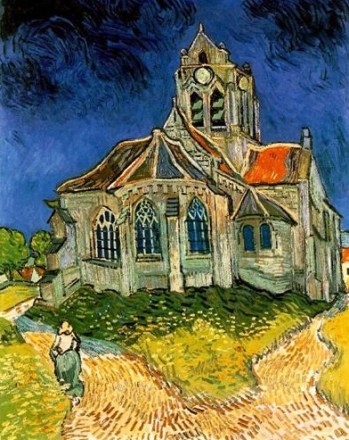
Not all people see the church building, and what it represents, in the same light. The Church at Auvers, by Vincent Van Gogh, circa 1890

Not all people see the church building, and what it represents, in the same light. The Church at Auvers, by Vincent Van Gogh, circa 1890

But in time, they’ll speak. (Right now they’re busy with homosexual marriage, Islam, and everybody’s favorite, the presidential election. Has one of them made an automated call to you yet, telling you to vote the way Jesus would vote?)

Among my peers, however, chatter is chittering, and I have run across more than one blog, or Facebook post, that denounces those of us who leave man-made church services as prideful, arrogant because we feel like we’re smarter than the rest of the herd, and don’t need to be told what to do.

Well, while there is something intellectually desirable about a resistance to blindly accepting everything we’re told, many of us who jump the fence don’t do so because we can’t handle people thinking differently. What stifles us is the level of mediocrity to which we are encouraged to reach.

Conventional Teaching

Awhile ago, I ran across an acquaintance from church days, and in the course of conversation, it came about that this generous, kind, good-hearted woman is undergoing yet another surgery to correct a condition that she was told, after the first surgery, should be resolved.

It wasn’t, and there is no guarantee that this latest procedure, which she sort of needs to continue living, will do the trick either.

“I don’t know what God is trying to teach me in all this,” she said. “I’ve thought and prayed and asked Him, but these things keep happening.”

Provincial Afternoon, inspirational original oil painting of French landscape and two girls reading by Steve Henderson

Reading Scripture, for ourselves and without “guidance” from people who insist they know better than we do, is a pleasurable, leisurely activity. Provincial Afternoon, original oil painting by Steve Henderson, sold.

“Maybe it’s not that you’re bad or wrong,” I offered, “but that the technology isn’t as good as what the medical establishment says it is.”

“Well . . . maybe,” she replied, “but I think Satan is in all this. You know how God allowed Satan to work in Job’s life; well, I think He’s given him a hand in mine.”

O.M.G.

Where Is the Love We Hear About?

I honestly didn’t know what to say. This woman — did I mention that she was generous, kind and good-hearted? — exudes compassion to the underdog because she spent a childhood as one. Like many, the draw to Jesus was His unconditional love, something she struggled to grasp simply because she — like most of us human beings — had never seen it put into place in the world market around her. The promise of genuine, worthy, honest, real love sounded too good to be true. And apparently, within many religious systems, it is.

Does God show unconditional love to His damaged children by saying to Satan,

“Very well, then, he is in your hands; but you must spare his life” ? (Job 2:6)

Okay, He said it in the book of Job, in which, while it may or may not be historically true (come on, English majors, it reads like a story), the person under attack is a man who had everything: houses, kids, cattle, fame, esteem, both Boardwalk and Park Place with hotels on them. The book of Job is an expository on the fallacies of our various teachings about God — expressed through the words of Job’s “friends” — and there is no need for us, our Father’s precious children, to walk around in fear that God will toss us, like a piece of meat, to the dogs.

And yet we do. And we continue to do so because we know so little about the Bible, and Christ’s teaching, and this mind-blowing concept of unconditional love that many of us — after 10, 20, 30, 40, years of attending man-made church services, socially segregated Sunday School, and thematically inspired small groups, hang our head and say,

“I’m just a sinner. I deserve everything I get.”

For all that we quote John 3:16, do we ever take it seriously?

The god Worth Avoiding

Throughout more than 25 years of my existence as a Christian, I kept my distance from God, because I didn’t find Him a particularly trustworthy guy: He spends His entire day determined to shake me from my comfort zone, punishes me for unworthy thoughts, insists that I awake at 4 a.m. to spend Quiet Time with Him; specifies certain ministries as acceptable but many others as not; and has laid down a bunch of rules and regulations concerning what I should eat, whether I can imbibe, how low the front of my blouse can go, how far I can push swearing (“dang,” is okay, “damn” is not, unless I’m talking about the status of the majority of humanity), and, according to celebrity religious leaders whom I dislike and distrust because their fruit reeks but apparently He has put into place to direct my life, how to vote.

In 25-plus years of church attendance, I didn’t receive any significant message to the contrary. Surrounded by people whose major interpretation of the good news is that we won’t go to hell, even though many people we love will be there, I did not find my faith challenged and growing so much as apathetic, and desperate to maintain the status quo.

As long as I showed up, raised my hand when told to do so, and volunteered for the ministries God was “leading” me into, my Christianity, I was assured, was fine.

But it wasn’t, something I never knew until I eventually left, and began seriously reading the Bible with a willingness to ask questions about the things I didn’t understand. I found out that God didn’t get mad when I stopped at a passage and said, “This doesn’t seem like you, God — it seems mean and irritable. Is there another way to look at it?”

Often, there was — and never, was it something I had heard from the pulpit.

Leaving a religious system is a lot like no longer watching TV or movies — you don’t feel superior about this; you feel free. You don’t look down on the people still trapped — you just wish that they could see.

Thank You

Thank you for joining me at This Woman Writes, where I encourage all God’s children — whether they attend church or not — to take seriously this concept of our Father’s love.

Posts complementing this one are

Leaving Church: Is It Rebellious, or Obedient?

What Does “Real” Church Look Like?

Why You Don’t — And Won’t — Fit In


Posted in Christian, church, Current Events, Faith, Family, God, home, Life, Lifestyle, Politics, religion, spirituality, Uncategorized | Tagged , , , , , | 2 Comments

Attack and Kill-Style Christianity

No matter how much TV we watch, Facebook we follow, or YouTubes of inane music videos we ingest — in other words, no matter what our level of apathy and willingness to allow others to control our minds — we all get passionate about something.

This is one of mankind's favorite activities. Do we copy the world's way? Photo image of World War I, the war to end all wars.

This is one of mankind’s favorite activities. Do we copy the world’s way?
Photo image of World War I, the world to end all wars.

Among Christians, that passion can lead to heated arguments, especially if we feel that an incontrovertible truth is being stomped on; the problem is, we have a tendency to fight dearly for the wrong thing.

Like, church attendance as a sign of one’s devotion to Christ. (We can thank a major evangelist of too many recent years for the message of, “Go to church, any church — even if one group appears to vehemently disagree with another, it’s being in the group that counts.”)

Or, we are obligated to obey all authorities — secular and religious, including that major evangelist, and his son, and his son’s sons, who for no other reason than that they reached out and grabbed it, demand our allegiance and loyalty.

Other issues are more deep-seated and difficult, because they hearken back to days murky in the past, when some church father or group of fathers set up and developed a doctrine: the doctrine of original sin, the doctrine of hell, the doctrine of the Trinity, the doctrine of the age of reason and accountability; the three-four-five-six steps necessary to achieve salvation. There is a doctrine and pat answer for everything, and when a person observes that the answers don’t adequately answer all the questions, it is never the doctrine that is brought under review, but the motives, intelligence, worth, and value of the person asking the question.

Now understandably, some people ask questions simply to be difficult, and have no real interest in the answers. Their approach tends to be along the lines of, “What about this?” and while we’re musing over an answer to that they interrupt with, “And this? And this? And THIS?” When we realize that we’re operating on the defensive, covering our face from a slap, it’s a good time to stop and pleasantly say, “I don’t have the answer to all those questions, but I’m not sure that you really want them. What do you think about the rain that they’re forecasting for this weekend?”

Some People Really Want to Know

Other people, however, ask questions wonderingly yet hesitantly, aware that when they bring up an issue, it will result in a reaction. Evangelical Christians who have settled themselves comfortably in pews (or stacking chairs) for years know intrinsically that they don’t talk about the teaching that God sends to hell all people who don’t confess the name of Jesus in a prescribed manner AND exhibit faithfulness to that name by following the rules set up by their specific “community.” (It differs, depending upon the denomination.)

Seaside Story inspirational original oil painting of girl on ocean beach with mother by Steve Henderson

Very young children are innocent — those of us who are parents know this. We operate on this truth when we ask questions about our heavenly Father, and how He interacts with the beings who are made in His image. Seaside Story, art print from Steve Henderson Collections,

For those who can stand up against attack and don’t mind being called a heretic, they eventually get the answer that, “God made the universe and it applies by His rules. Either you follow those rules, or you don’t, and by even questioning the nature of His goodness, you are sinning.”

(It’s no wonder that a lot of people opt to walk away from this system, but quite unfortunately, many — when they do so — turn their back on God altogether, so closely do they align Him with the doctrines and teachings of men.)

There are a tremendous number of difficult passages and stories in Scripture, and rather than say, “That is a tough one — the answer to it is hidden to me, and apparently most people, right now. But I know that any answer given that puts into doubt the love of God — any answer that makes Him look no better than an irritable Greek deity — is missing the mark,” we toss out half-baked solutions and expect reasonable people — many of whom simply want God to be a better parent than what they try to be — to blindly accept what they’re told.

Innocents, and Babies

Recently, I was researching the issue of the Hebrews and their assorted enemies, and God’s command in 1 Samuel 15:3 to “put to death men and women, children and infants, cattle and sheep, camels and donkeys.” The book of Joshua records multiple occurrences of this Take No Survivors mentality, and one has to ask, “If it was so bad for Pharaoh to destroy the innocents in Moses’ time, or Herod to do so in his effort to eliminate the Messiah, then why is it okay to do this to other people’s children?”

“Because those people were REALLY bad,” is one answer. (Even the babies?)

“Because God needed to wipe out all the bad influences.” (It would be nice if He would do that today.)

or my favorite,

“God was actually doing a favor to these babies, because if they had grown up in their evil culture, they would have been damned to hell for eternity. This way, because of the doctrine of the age of reason, they were saved. Don’t we serve a wonderful God?!”

And then again there’s always, “God’s ways are not our ways because we are sinful and horrible, and you are sinful and horrible for even doubting Him.”

If we’re going to talk about the age of reason, shouldn’t we use some of that ability to reason, once we’re old enough to acquire it?

(By the way, the wisest statement I ran across in various blogs was, “It’s puzzling. But what is more disturbing is, what was the effect on the Hebrew men who killed the women and children?”)

The point is, the questions are there, they are difficult ones, and pat answers that don’t satisfy simply shut people up. Is that what we want, to shut honestly questioning people up?

As Christians, it is not our obligation to argue people into heaven, and attacking people for asking questions, or readily labeling them a heretic, is not our job. We don’t have to worry about defending God, as He is perfectly capable of doing the job Himself: we are to love Him dearly, love our neighbors as ourselves, and trustingly turn to Him with those difficult questions.

Thank You

Thank you for joining me at This Woman Writes. I am one of those people who asks questions and ferrets out the answers, but I wasn’t able to do so until I left the environment where questions are frowned upon as sinful doubt. That’s not just in many churches, by the way: the admonition to accept and obey pervades our entire society. One can’t help but think that church culture is a breeding ground for inculcating people into compliance and complaisance.

Posts complementing this one are

It’s Time to Change Our Minds about Repenting

How to Recognize a False Prophet

Does Jesus Get Mad When We Complain?

Posted in children, Christian, Faith, Family, home, Life, Lifestyle, religion, spirituality, Uncategorized | Tagged , , , | 10 Comments

How Influential Is the Christian Vote?

Most of my information on the 2016 U.S. presidential election comes from my spam file, and I keep up with events in the two minutes it takes me to clear the detritus each day. One recent headline brayed,

“Christian Evangelical Voting Bloc crucial to election results!”

Child of Eden inspirational original oil painting of little girl in garden with radishes by Steve Henderson licensed wall art home decor at icanvas, posterhero, prints.com, fulcrum gallery

Jesus repeatedly points us to children and advises us to emulate them. And yet, not only do we refuse to do so, we make a point of teaching the opposite. Child of Eden, original oil painting by Steve Henderson; licensed wall art home decor at Fulcrum Gallery, Prints.com, iCanvas, and more

Really? Click. Delete. Onto another ad for Viagra, or SEO enhancement. It all starts to sound the same. Pumped up.

Media propaganda aside, I wonder,

“Does the average person who calls himself or herself a Christian — basing this belief upon church attendance, a propensity to write checks to prominent faces, and a trust in Fox or Christian ‘news’ sites for valid information — truly believe that the way they make a difference in society is to cast one pathetic vote for a solitary human being who doesn’t possess the remotest idea of, or concern for, their existence?”

The early Christians, the ones we say we’re all trying to emulate when we gather together in small groups to read and discuss Rick Warren’s Purpose Driven Life, didn’t have a lot of bloc-voting influence in their societies, and while one certainly doesn’t envy their vulnerability to attack from government and religious officials, one can appreciate and admire their freedom from the celebrity Christian circus arena: their mountebanks operated in smaller spheres, and televangelism and major “Christian” book publishers hadn’t been invented yet.

Presidents, Emperors, and Kings

Political leaders didn’t bother pretending to care what Christians, or any other group of ordinary humans, thought, and ordinary people possessed enough common sense — or hard-earned experience — to realize that there was a significant gap between the rulers and the ruled. (Jesus mentioned this; see Matthew 20:25.) The power of Christians did not derive from movement leaders who agitated the pack into supporting this human or that, pressuring them to send money to Evangelist Speaker A because he tells the world about Christ (far better than we can), or to support the candidacy of  a politician who, because of his deep, sincere, and tactfully expressed faith, will single-handedly bring our nation back to its days of glory, greatness, and belief in God.

Grace inspirational original oil painting of woman dancing on coastal ocean beach in pink dress by Steve Henderson licensed wall art home decor at posterazzi, framed canvas art, amazon, great big canvas and prints.com

Truth does not always look like what we think it does; power and strength are not the province of weaponry and war. Grace, original oil painting by Steve Henderson; licensed wall art home decor at Great Big Canvas, Posterazzi, Framed Canvas Art, Prints.com, and Amazon

The power of Christians derived from — then, as it does today — Christ.

“You are the salt of the earth; but if salt has lost its taste, how can its saltiness be restored?” Christ spoke to His followers in Matthew 5:13. “It is no longer good for anything, but is thrown out and trampled under foot.”

What is our saltiness, as Christians?

Salt, by its nature, is a powerful seasoning, and it doesn’t take much of it to flavor, preserve, and enhance. It also dissolves, and any huge clumps of it in the stew cause the taster to recoil. Yet we are told that our power comes through operating as a monolithic, group entity with no individual expression or dissent: boycott this, protest that, pool your funds to pay one man to promise to do the work of all, vote unanimously to “prove” the rightness of the decision, join the group and do what the leader says. When we fall for this line, at best, we are a lobbying power; at worst, we are dupes allowing our voice to be controlled by others. This latter happens often when we follow another voice — from the pulpit or behind a “news” desk — which works us into such a state of impotent anger and fear that we figure the only way we can get anything done, is to obey our superiors.

In Christ’s name, of course.

We Are Family, Not Employees

Christians are a family, not a corporation; we are part of a body, not a voting bloc; we operate as unique human beings who are individuals, so individual that our Father knows the number of hairs on each of our heads. Our impact comes through loving one another as Christ loves us, and quite often, these acts look very small and insignificant, but not to the people toward whom we direct our love.

When we buy a winter coat for a child, we make a difference in the life of that child (by the way, we can do this without participating in a program). When we meet a friend for coffee and listen, truly listen, to the pain about which she is talking, we make a difference in the life of our friend. When we hear about a family’s trouble with their oldest teenager and do nothing more than stop the thought, “Well, they have such a loose parenting style,” we at least have not contributed to their anguish.

Yes, these are small things, unexciting things, things so well within our capacity to perform that we don’t see the value of doing them. But if we did do them (Love our neighbor as ourselves) in conjunction with talking with our Father on a regular basis (Love the Lord God with all our heart), we would find ourselves making an impact, simply by virtue of living according to radically different standards.

Rather than give our money and time and energy to a cause, an organization, an institution promising us “buying power” through the collectivist assemblage of our voices, we can wisely direct our resources toward small, ordinary arenas — impacting individual lives which don’t show up anywhere in the corporate-sized “non-profit” charities, mandatory-contributed-to government programs, or billionaire philanthropists’  lists.

But those individual lives show up, and matter, in our lives. When we take our time and our dollar  (or $5, or $25, that only matters to a major organization because it is combined with thousands of other little bits) and direct it toward another human being whom God has put into our lives, then we make a difference that actually makes a difference.

Thank You

Thank you for joining me at This Woman Writes, where I encourage individual, ordinary people to stop looking to others — mega-pastors, Christian celebrities, financiers, politicians — to solve the world’s issues. They’re sort of the source of it all, you know?

Posts complementing this one are

Your Vote Is Worth Less Than Your Prayer

It’s Time to Change Our Minds about Repenting

Fear Mongering

Posted in Christian, church, Current Events, Faith, Family, God, home, Life, Lifestyle, Politics, religion, Uncategorized | Tagged , , , , , , , , , | Leave a comment

A Woman’s Role in Church — What Is It, Anyway?

Relationships between men and women spark conversation and controversy, and if you want to get a good argument started, ask the question,

“What is the woman’s role in church?”

Not surprisingly, many men and women, especially those of the evangelical persuasion, reply along the lines of,

Gathering Thoughts, inspirational original oil painting of woman on ocean coast beach in the waves by Steve Henderson licensed wall art home decor at Great Big Canvas, iCanvas, Amazon, Kirklands, Wayfair

How we live, and what we do, takes thought, consideration, prayer, and meditation. There are no easy, trite answers. Gathering Thoughts, original oil painting by Steve Henderson; licensed wall art home decor at iCanvas, Wayfair, Kirklands, and more

“She must be submissive and quiet, respectful to male leadership, and she should NEVER TEACH MEN! She may, and should, actually, teach children’s church, since this is a special area that women are really talented in.” (We also, for some reason, are exceptionally skilled at changing diapers, dealing with runny noses, and mopping up the product of upset tummies. And the donut ministry, in the back foyer with the coffee pots, simply wouldn’t exist without women.)

A plethora of Bible verses are brought into play as to why women take a secondary (but, we are assured, important) role in spiritual matters. We’ve all heard about how Eve ate the apple first, which we’re told says volumes regarding her naivete and how easily she is fooled, although one can’t help but wonder about Adam’s perspicacity, or singular lack of it. If the temptation account of Genesis 3 makes the woman look credulous, the man comes out looking hardly any better.

Whacked by Bible Verses

But the point is, although there are plenty of verses to verbally thrash any upstart back into submission — a misguided technique we easily fall into when we see the Bible as travel guide or spiritual etiquette pamphlet as opposed to a rich resource for learning about who God is, and how much He loves us — there are always verses that don’t fit, and need to be prodded and pulled and pummeled into shape:

“There is neither Jew nor Greek, slave nor free, male nor female, for you are all one in Christ Jesus.” (Galatians 3:28)

This is not a counter statement to the “other side’s argument” so much as it is a beautiful affirmation of the worth and value of all human beings — women are not “lesser,” employees (rapidly becoming the 21st century slaves) are not “inferior,” those of Jewish descent or perceived Jewish descent are not superior, possessors of a “Better Than the Rest of Humanity” pass regardless of how they act, believe, or treat others. We are all one in Christ, beloved children of a most merciful and loving Father, and we are all to approach our Father individually and privately, relying upon Him to build and strengthen our closeness to Him.

The Father of Daughters and Sons

Diaphanous inspirational original oil painting of beautiful woman in lilac dress at grand canyon by Steve Henderson licensed wall art home doecor at allposters, amazon, art.com, Great Big Canvas

If we stop worrying about buildings and systems, it’s amazing the places God can take us — and there’s no glass ceiling. Diaphanous, original oil painting by Steve Henderson; licensed wall art home decor at Great Big Canvas, Art.com, AllPosters, Amazon.com

As women, we do not need to secure our husband’s, or any male’s, permission to enter into conversation with our Father, nor do we need testosterone-based guidance in studying the Scriptures, in the same way that many of us are capable of contributing to the family income, managing the finances, or getting the car in for its oil change without subsiding weakly into virile arms, aflutter with the vapours.

We use telephones, drive trucks, push lawnmowers, and conduct public conversations with men, women, and children. And quite honestly, we teach men all the time — whether it’s because we are their managers at work, their mothers who don’t stop giving advice when they reach adolescence, or simply intelligent, articulate beings who find that, sometimes, we have something significant to say.

But the problem is, while we are able to walk down the street without being accompanied by the household footman, we can’t — in many churches — stand behind the pulpit and teach.

The Glass Cathedral Ceiling

But is this a problem? If the cathedral ceiling of the rapidly becoming inconsequential contemporary “church” is closed to the voice of women, does this mean that women do not speak?

Not at all, because when we recognize that there are two major definitions of church — 1) the multiple weekly event that involves, for most people, sitting and listening and 2) the body of Christ in which we are all valued children of our Father, each with unique gifts meant to be used — then we can effectively decide where we want to spend our energy (and, come to think of it, our money).

And the best place to spend it, the one in which we are not fettered by literally man-made dictums, is in the real church, the one in which we operate as a son or daughter of God. Now in this real church, we speak and give and receive and teach and learn as we we go about the process of living, and we reach, and are reached by, those who are in our sphere of influence — family, friends, the checker at the grocery store, the librarian who forgives our late fees.

There is no guarantee, however, that we will wear religious robes, or bask in the adulation of acolytes, or receive compensation for what we do, which is, indeed, what those at the top CEO status of the religious organization that we mistakenly identify as “church” receive. If that is our goal, then we probably won’t reach it, because few people, even men, make it to the top of that corporate ladder, and even in the lesser regions, where male elders and deacons and pastors spend more time studying “leadership issues” than they do books of the Bible, it would do little good for a woman to try to break in. The people who cleave to that sort of teaching aren’t ready to hear words — from a woman or a man — that don’t conform to their rule models.

So why bother? Why waste energy with a system that presents itself as a weak substitute for the real thing when we could be learning, questioning, reading, praying, loving, teaching, and doing good things for others, going about our Father’s business with all the energy and creativity that He has given to all of us?

Whether you are a woman or a man, if you know that you are God’s daughter or son, then speak. Those who have ears to hear, will listen.

Thank You

Thank you for joining me at This Woman Writes. You may notice that I’m not particularly big on group-think, group-speak, or inveterate group participation, because commonsense shows us that, in all groups, only a few benefit from the energy and contribution of all.

That’s not how it is with God, who shows no favoritism. He does not bless others, at the expense of you and me, because others are more valuable. But for some reason, we act as if He does.

Posts complementing this one are

What Does “Real Church” Look Like?

When Christian Leaders Say “Jump!” Do We Leap?

“If You Leave Church, How Will You Fellowship?”

Posted in Christian, church, Culture, Faith, Family, home, Life, Lifestyle, Relationships, religion, spirituality, teaching | Tagged , , , , | 4 Comments

“If you leave church, how will you fellowship?”

When a person decides to leave a group, any group, the general response from those left behind is to pressure the dissenter into staying. And the most powerful argument tends to be along these lines:

Afternoon Tea inspirational original oil painting of woman and child at tea party by Steve Henderson licensed wall art home decor at walmart.com, amazon, art.com, icanvas, great big canvas, and more

One can understand, and make excuses for, people who seek position, fame, and money; but why do Christians so little value the company of those closest and dearest to them? Why do we feel that we have nothing to give or teach one another? Afternoon Tea, original oil painting by Steve Henderson; licensed wall art home decor at Great Big Canvas, Art.com, icanvas, Walmart.com, and more

“But how will you interact with other people?” as if the wanderer, in choosing a less traveled path, eschews all future human companionship. Group participation, and group-think, is an essential component of 21st century society, and we are taught from babyhood that our primary, significant relationships are not with family, not with close (real) friends, but with co-workers, student peers, and a series of distant acquaintances we see regularly in a socially controlled environment. Indeed, many people well beyond middle school make decisions based, not upon what is best for them or their family, but what “others” will think.

Those who opt to home school field the question in the format of, “But how will you properly socialize your children?” an excellent response to this being, “It’s because we want our children to be normally socialized that we’re opting to homeschool.”

Properly Socialized Christians

For those who dare — spiritually, socially, emotionally, and physically — to leave the conventional, corporate, multiple-weekly church lifestyle, the question is formatted as a statement, and a biblical one at that:

“Hebrews 10:25 COMMANDS us to not neglect to meet together, as some are in the habit of doing — Forsake not the assemblage of one another!”

Hello New York inspirational original oil painting of fashionable vogue woman with red umbrella by Steve Henderson licensed wall art home decor at allposters.com and art.com

People who think and act like individuals are so much more interesting than members of a herd. We are all unique, unusual, and precious individuals. Hello New York, original oil painting by Steve Henderson; licensed wall art home decor at art.com and allposters.com.

(One has to observe, wryly, how often we are told that the Bible COMMANDS us to do this or that — obey the government, not be anxious, attend Sunday School, submit ourselves to a hierarchy of man-made leadership that benefits a few elite at the top [pyramid schemes come to mind] — while the many, many mentions of money, the love of it, and the damage that is done when one makes it one’s priority, are shuttled to the side as “optional.”)

But back to Hebrews 10:25 which, given the frequency with which it is slung at those who mention leaving the group, encapsulates the primary argument as to why we must stay. Is it possible that we are misapplying its advice?

No One-Size Fits All

Those who study the Bible for themselves and and start seriously asking questions (one hopes that this would be all Christians) quickly realize that there are few hard and fast answers, few “right” and “only” ways to look at a verse. Commonsense tells us this is so simply by the many different denominations, all of which purport to have the true and accurate rendering of the same book. So in looking at Hebrews 10:25 we ask ourselves, “Is this declaring that people should attend church services regularly?”

Considering when the book was written — in the mid 60s A.D. is a consensus — it is highly unlikely that the early Christians had developed a system such as ours today, complete with announcements, professional “worship” service, and pastor’s sermon, to the point that this was the norm for all believers. More likely, and especially in light of the persecution toward believers that is addressed throughout the book, they met in small bands, at houses, without the sense of veneration to place or pastor that those in surrounding society exhibited toward their temples and their gods (and that many Christians today demonstrate toward their specific “house of worship”).

As some of these house churches grew into organizations that fed upon themselves, what if some of the Christians began neglecting the simple getting together of one another — to eat, to converse, to pray in a small, intimate setting — in exchange for something bigger, decidedly less personal, far more regulated, and “better”? What if they began following this speaker, that evangelist, those teachers (1 Corinthians 1:11-12) to the point that they no longer valued one another as individual, equal believers, but sought out first century Super Pastors and mega churches?

Group-Think Doesn’t Involve Much Thinking

Quite unfortunately, this scenario sounds normal to us today, and the other — the getting together of far fewer people  (friends, family, neighbors) in a more intimate setting to share food, concerns, spirituality, the teaching of and learning from one another, and life — is considered a psychological and social aberration. It’s not biblical, we’re told, for a cluster of ordinary believers to assemble, without benefit of clergy, leadership, scribes, Sadducees, seminary graduates, and religious PhDs. That’s how cults start.

What is normal is the Sunday morning rush, the bundling of everyone into the mini-van to arrive, breathless and irritable, to pick up the bulletin, slap on a seraphic smile, and publicly share one’s private life and deepest feelings with virtual strangers, during “prayer and share” time or within the physical circle of the “small group.”

For many Christians today, this is the single, sole, and significant form of their assembling with other believers, and — because it demands so much time from its constituents — takes the place of the other, the meeting together in small, informal, socially relaxed, normal interaction. In cases like this, one can strongly argue that they are “neglecting to meet together, as is the habit of some,” and are substituting an impersonal group activity for real, viable, human fellowship and interaction.

Jesus’s most significant teaching took place among a small circle of His disciples, to the point that, shortly before His suffering and crucifixion, He referred to them as His friends (John 15:15). Is it such a bad thing to strive and long for the paradigm that worked so well for these first believers?

“No one has greater love than this, to lay down one’s life for one’s friends.” (John 15:12)

Thank You

Thank you for joining me at This Woman Writes, where my prayer, for the believers in my country (the U.S.A.) and other places where materialism is worshiped as a sure sign of God’s favor, is that they will separate cultural “norms” (which are fed to us through our educational, political, entertainment, and religious systems) from truth.

Posts complementing this one are

Leaving Church: Is It Rebellious, or Obedient?

What Does “Real” Church Look Like?


Posted in Christian, church, Culture, Faith, Family, home, homeschooling, Life, Lifestyle, religion, spirituality | Tagged , , , , | 6 Comments

How To Leave Church, Properly, without Mistakes

You can be sure that, if there is anything you want learn how to do, there is a book written on it.

You can also be sure that most of the self-assistance books (especially the ones that trumpet being “Everything You Need to Know about . . .”) aren’t worth the price of the postage to send them, consisting of quickly cobbled together rehashed material with a sprinkling of inspirational photos showing you what the finished product is supposed to look like. (You’ll never replicate it: the project is too complex, and the instructions too simplistic. But the photos are “inspiring”).

Hand in Hand inspirational original oil painting of couple walking on coastal ocean beach by Steve Henderson

Leaving one place to go to another is essentially a process of walking. Hand in Hand, original oil painting by Steve Henderson

So it is when you choose to leave the established, weekly church service paradigm — a decision more and more people are making these days. Admittedly, there aren’t a lot of books written on this — YET — simply because it is not in the interest of the corporate Christian complex, with its voice represented by major Christian publishers, to encourage, or even acknowledge, any rebellious act of independence on the part of acolytes.

But as more and more of these acolytes wake up, shake our heads, and blink, the shockingly rare occasion of a person deciding to

  1. leave the corporate church situation without
  2. giving up on God, but rather
  3. pursue God outside of the conventional “norm”

becomes less and less of a rarity. And as things become less of a rarity, they alarm those who have a vested (read: financial) interest in keeping things the same.

Not All Fruit Is Sweet

(Stop, for a moment, and consider the fruit of massive church attendance: there is a literally captive audience that sits, passively, in the pews and absorbs what it is told from the pulpit.  Is what they are taught sufficient to “equip the saints for the work of ministry, for building up the body of Christ, until all of us come to the unity of the faith and the knowledge of the Son of God, to maturity”? [Ephesians 4:12] The most unifying factors we see among many evangelical, churched Christians today are fear of the future, an obligation to support anything the modern state of Israel does, denigration of entire religious or ethnic groups, worship of the military and anyone else in uniform, blind acquiescence to authority, and a distinct tendency to vote Republican.)

So the first thing to do is to stop us from leaving in the first place. This is initially well accomplished by peer pressure, as well as regular applications of Hebrews 10:25 (“not forsaking the assembling of ourselves together”), but at some point, really irritatingly persistent people, with serious questions about the gospel and why what we’re told it is, is such good news, eventually see leaving as their only option. (At this point, many of their “leaders” emit a sigh of relief, as these difficult people only cause others in the group to bestir and feel the first pangs of discomfort that, unless quickly repressed, result in further questioning.)

Sunday Morning Looks Different, Now

But after we leave, what then?

How does one “assemble together” and “worship” and “live the community Christian life” in accordance with the way that the first century Christians did, which, we are constantly given to believe, is the only right and proper way to do it? In other words, how do we make sure that we don’t do this whole thing wrong?

The Way That It Should Be inspirational original oil painting of couple standing and embracing on coastal ocean beach by Steve Henderson

As we free ourselves from traditional and man made conventions of how things should be done, we’ll find ourselves doing things differently. The Way That It Should Be, original oil painting by Steve Henderson

This very concern we have of doing things “wrong” is a leverage that can be used against us, and cleverly enough applied, keeps people from making a clean break from an adulterated system, because we  know so little of God’s mercy, love, guidance, and interest in us that we’re convinced He’ll drop us for not following the “rules.”

But in the first place, there are no “rules” — nobody really knows how the first century Christians worshiped, although plenty of emerging voices (funded by the corporate Christian establishment) are willing to lay out the system for us. It’s not much of a stretch of commonsense, however, to grasp that how our earliest brothers and sisters worshiped doesn’t resemble traditional, 21st century, corporate church service.

So if you leave that, you’re not leaving the ways of Peter, Paul, and Mary.

But what to do? Does one start a house church? And if so, how does one run it?

Who speaks? Just the elders? Only men? And how do we choose them?

Is it okay to not meet officially at all, but simply to read and meditate on one’s own, and informally get together with other believers, and just talk? Does talking with immediate family members and very close friends count as fellowship?

Whose Answers Meet Our Needs?

These are good and valid questions, ones without definitive answers, but as the literal movement of people from the pews to someplace outside of the pews continues, wait for it: the books, with definitive answers, will come; they will be published by major Christian houses (which don’t look at writings from individual “nobodies,” by the way, so don’t think they’re discovering fresh and unusual voices); and they will guide us, step by step, into a doctrinally correct form of worship outside of the box.

At some point, celebrity Christians will speak — first to urge us back to the box, then, as disobedience to their authority (they get that from us, by the way, when we give it to them) persists, to “guide” and “teach” us how to be this new type of Christian. At some point, they may go to the airwaves,  allowing us to “worship,” in the privacy of our homes, under their aegis.

Oh, wait. They already do that.

Our path, as Christians, is a narrow one — anyone who hikes knows that narrow paths are generally more difficult, far less populated, and not easy to pick out — they require stamina, patience, clear thinking, and persistence because they take us to incredible places.

The only book you need to do this does not pay royalty fees to its author, nor did He write accompanying workbooks. Start there. Open your mind as well as your eyes, and pray for the discernment and guidance you need to take the next steps.

Thank You

Thank you for joining me at This Woman Writes, where a companion article to this one is Leaving Church: Is It Rebellious or Obedient? As this has, at the end, the caveat about “not all churches being bad, etc., ” and “this may not be for you, etc.,” I will not repeat them here.

My goal, as a writer and a Christian, is to encourage the seekers and believers who are tired of twisting and contorting themselves to fit into the very small space they are being squeezed into.

Posted in Christian, church, Daily Life, Faith, Family, home, Life, Lifestyle, religion, spirituality, Uncategorized | Tagged , , , , | 5 Comments

It’s Time to Change Our Minds about Repenting

Some words are off-putting, like rancid bacon slowly turning green in the back drawer of the fridge.

One of these words, frequently used and misused within churchified Christian circles, is “repent,” which brings to mind debasement and public humiliation as the acolyte stumbles forth — just as they are — to the altar or playing field in the football stadium, pronouncing to all their status as reptilian reprobates who have been brought to a state of subjection and submission.

Sea Breeze inspirational original oil painting of coastal beach scene by ocean with meadow grass and sunset

To think clearly, it helps to get away from all the noise. Even when we feel we are alone, we’re not, because God will never abandon us. Sea Breeze, art print from Steve Henderson Collections

How odd that their first prayer to the God of mercy is one of degradation, advanced before a community of silent watchers. One wonders why the evangelist, or the pastor, or the speaker doesn’t reference Matthew 6:6, and encourage the listener to speak privately, with dignity, to their newly discovered Father — but then again, it’s so much more exciting and profitable to see the people teeming forth like lemmings, in tandem with soft, hypnotic music droning in the background. (And unless you see who they are, you can’t send converts through the sheep chute to the various churches — of disparate denominations, many of which disagree with one another — which sponsor the speaker.)

Some people, given the opportunity, “repent” in public any chance they get, never secure in the knowledge that they are a precious child of God, and convinced that their Father needs them to announce, over and over and over again, how repugnant they are.

Others, confident that the first time they did it bought them a righteousness that shines forth more brightly than the loathsome lives of smokers, drinkers, people who swear, and other clear sinners who exhibit their impurity by how they dress, act, or think, see repentance as something other people must do — multiple times — until their lives are in line with all that is good and proper.

We Are Not Called to Debasement

But repentance is not meant to be a debasing, degrading action. A simple Internet search of “What does metanoeó (the Greek word we translate as repent) mean?” results in a number of articles addressing the difficulty of the word, namely that we have no one word in English (or presumably, any language outside of Greek) to give a good definition. My own Greek/English interlinear Bible defines the word as, “to change one’s mind.”

Three Horses inspirational oil painting of mountain meadow by Steve Henderson

We are not beasts, to be herded and controlled by human masters. Three Horses, original oil painting by Steve Henderson

To change one’s mind. To alter the way one thinks.

This concept is one we can all embrace, regardless of our public or privately held spiritual status, and indeed, for those of us who call ourselves Christian, it is a good, healthy, wise, and nourishing thing to consider our unquestioning — literally thoughtless — interpretation of God, and see if we would benefit in our relationship by changing how we think.

Who Is God, and What Is He Like?

Is He really a God who monitors our every thought for holiness, and disciplines us, harshly, when we doubt, or get angry, or swear, or scheme? (If this were so, especially regarding the latter word, many prominent “Christians” would be reduced to a pile of gently smoking ashes.)

Does He hold out, like a carrot to an ass, the promise of peace and joy and freedom from anxiety, but ONLY if we abandon ourselves, completely, into His hands? And as we doubt, or don’t have the amount of faith that we are constantly berated for not having, does He snatch the carrot away? (Could it possibly be that we are reliant upon Him, as we are for everything else, for this faith?)

Does He keep track of our “quiet time” and “study time” and “prayer time,” withholding growth and goodness until the hours add up?

Is He so very concerned about our being “purposeful,” and “transparent,” and “submissive to leadership,” and “intentional,” and “positive,” and “a member of community” that when we are not these things, according to those who audit our compliance, then we are in His disfavor?

For that matter, is there some reason why we are constantly in His disfavor?

Repent. Really.

If this is how we think about Him — and as a survivor of too many years of attendance at establishment, industrial Christian churches that operate more like corporations than they do assemblages of human believers — I have seen, and continue to see, many believers struggling with this irritable, capricious, erratic, and unpredictable despot. It is no wonder that they cannot grow close to a father like this — no one should.

But if we repent — if we change our way of thinking — stopping ourselves when we’re tempted to say, “Oh, God will get you out of your comfort zone!” and reflect, instead, “As a parent, I do my best to gently guide and teach my children; God as my Father surely can’t have something to learn from me,” then we can begin to understand more about this Counselor, this Comforter, this Creator, this Perfect Father who doesn’t yell or slam doors or thrash us or leave the room — and our lives — until we improve our behavior.

It won’t happen instantly, in a football stadium, say, or at a monthly altar call, and indeed, the repentance that we’re looking for — that true changing of mind that allows us to drop the lies as we reach for truth — isn’t likely to happen in such a forced, artificial environment. It will happen on a daily and moment by moment basis, privately, as we grow more confident in the gracious, merciful, and loving nature of our Father.

Let’s truly change our way of thinking.

“Take my yoke upon you, and learn from me; for I am gentle and humble in heart, and you will find rest for your souls.” Matthew 11:29

Thank You

Thank you for joining me at This Woman Writes, where that’s what I do — I write. I don’t get paid for this, and I don’t have the worldly resources behind me to generate and create a “following” — but there are things that need to be said, so I say them. Thankfully, more and more people are questioning the things they are told, and more and more people — ordinary ones who aren’t promoted by the corporate arm of spirituality to keep us from opening our eyes — are speaking up.

It is my prayer that these essays will reach the eyes of seekers who know that something is wrong, but can’t put their finger on it. If what I say helps you, then please pass it on, because we live in a time when too many sleepy sheep are sweetly dozing to the lullabies sung by wolves.

Posted in Christian, church, Faith, Family, God, home, inspirational, Life, Lifestyle, religion, spirituality, Uncategorized | Tagged , , , , , | 5 Comments

Leaving Church: Is It Rebellious, or Obedient?

A reader recently wrote me concerning her leaving the established church. As with most of us who go through this process, she finds herself isolated from people she had grown to believe were friends, or at least “brothers and sisters in Christ,” which, oddly in corporate church circles, is a more detached way of phrasing things.

“No one around me understands, so they work hard sometimes to persuade me that ‘going it alone’ is how cults get started,” she writes, adding that, in both Old and New Testament times, it wasn’t considered normal to meet multiple times a week and do whatever it is we do when we meet multiple times a week.

Cadence inspirational original oil painting of woman walking on coastal beach by Steve Henderson licensed wall art at Fulcrum Gallery, iCanvas, Allposters, Art.com, Prints.com

We are called to walk the path set before us — and if we’re on the right path, it will probably be narrow, and unpopulated. Cadence, art prints from Steve Henderson Collections.

She concluded,

“Thank you for helping me NOT feel rebellious and anti-social!”

You are welcome, my friend and sister.

So what of it? Is this woman, who left the conventional church setting because she felt over stressed, underappreciated, quite possibly bored, and frustrated at the shallowness of the (multiple) weekly experience, rebellious?

Or — because she is listening to something deep inside her that simply will not be quiet —  is she obedient?

Those of us who have left the established, conventional, corporate, industrial Christian weekly experience generally do not do so precipitately, so offended by something said that we refuse to come back, ever again. Such behavior in anyone borders upon childishness, and from what I have seen of people who leave conventional church, they are not childish.

We Tried, We Really Tried

Rather, many are deep thinkers, followers of Christ who have tried for a long time to acquiesce to the invisible rules of the group: they give up their Saturdays for church work days, they take over unpopular “ministries” like chair arrangement or the washing of communion cups, they manage the ministry of doughnuts and coffee (especially if they’re female) they teach children’s church (female again), they show up at annual meetings in which everything is decided beforehand and all they are expected to do is vote “yes” where they are told to vote yes. (This latter reminds me, a bit, of presidential elections).

Not content to sulk in silence, as they are frequently accused of doing, they go out of their way to approach elders and the pastor privately and non-confrontationally, in order to express misgiving about the way things are being run: in our own church experience we found the over-emphasis upon programs and leadership-approved ministries cloying, with little time left over for serious fellowship among the saints.

Focus on an Elite Few

No offense to the pastor’s PhD or anything, but we really did want time to talk and listen to our ordinary brothers and sisters in Christ who were living real, gritty lives and had questions and answers we wanted to hear. But we were unable to do so, because predominance was accorded to the voice of leadership, which had so much to say about “community,” “intentional living,” “transparency,” and “purposefulness,” that our assembling ourselves together (Hebrews 10:25), pretty much consisted of making a worshipful circle around a few men.

Leaving, for us, was a long, ongoing process, because leaving the established, conventional church — until we grew close enough to God to actually learn more about Him — seemed akin to leaving Christianity.

But it isn’t, you know, and those of us who have left to the point of never wanting to come back generally grow in our Christianity, no longer receiving a weekly (or multiple weekly) injection of doctrine that doesn’t necessarily reflect Christ’s words. It’s interesting to note that He never said “intentional,” “totally transparent,” or “purposeful.” His message, unlike many messages we endured from the pulpit, was markedly devoid of corporate-speak.

Not Lightly Done

Leaving isn’t easy, and those who do so, don’t do it lightly. But we do it because something inside of us says, “Go. This isn’t working. Leave.”

Not all Christians hear this message, and more importantly, not all who hear it act upon it, so convinced are they that God would never call His people out of what they consider to be the only representation of His church, but He does make this call, and some of us do answer it.

It’s not an easy road. It’s not a popular road. It’s certainly not a wide road.

But if you are called to walk it, it’s definitely a road worth taking.

“As for what was sown among thorns, this is the one who hears the word, but the cares of the world and the deceitfulness of riches choke the word, and it proves unfruitful.” (Matthew 13:22)

Thank You

Thank you for joining me at This Woman Writes. If you have made it this far, allow me to insert the usual caveat that not all churches are bad, and not all Christians should leave them. However, the opposite applies: not all churches are good, and not all Christians should stay in them because this is the only way to serve God and interact with other believers.

Are you learning, are you growing, are you fellowshipping with believers in an informal, free way? Then by all means, stay where you are receiving — and able to give — spiritual richness.

But if you are frustrated, or feel as if you are in a rut, or battle sensations of inadequacy or sadness every time you return home from service, then don’t necessarily blame yourself. If going to church starts feeling like going to work, then maybe your church is running more like a business than a ministry to the saints.

Posted in Christian, church, Daily Life, Faith, Family, home, Life, Lifestyle, religion, Uncategorized | Tagged , , , , , | 10 Comments

What Does “Real” Church Look Like?

“Let us not give up meeting together, as some are in the habit of doing, but let us encourage one another.” (Hebrews 10:25)

What does “Real” church look like?

Those of us who have given up on traditional, weekly meetings in a brick-and-mortar building are fully aware of what “Real” church looks like to many, many Christians:

Eyrie inspirational original oil painting of Grand Canyon sprite facing sunrise by Steve Henderson licensed wall art home decor at icanvas, framed canvas art, great big canvas, amazon.com, art.com, posterhero, prints.com, vintage art, fulcrum gallery and allposters.com

Worship, joy, adoration of God, support of one another — we limit ourselves when we limit church to a particular building, closed group of people, or denomination. Eyrie, original oil painting by Steve Henderson; licensed wall art home decor at Prints.com, Fulcrum Gallery, iCanvas, Art.com, AllPosters, and more.

It’s in a building, generally Sunday morning.

You get handed a bulletin by an usher, but you don’t have to read it, because within 20 minutes, an elder or deacon will arise and repeat any pertinent news (upcoming work days, mid-week small groups, leadership meetings) that you are expected to attend. (Metro churches may be able to send this information to your phone; but someone will still read it aloud. A sign of a Real, Excellent church is that it keeps up with technology because that’s what people are looking for, the material written for pastors avers. That, and lots of specialized, age and lifestyle-specific group activities.)

You sit. Until the minute hand points to the 12 or 6, depending upon your local “community,” you may talk to your neighbors around you. Once the music starts — originating from the raised platform, ahead — it’s time to shush and hush. (Short, simple statements are popular, incidentally, like “Prayer and Share,” “Flex and Obey,” “Walk the Talk.” It’s a God Thing.)

Corporate Worship

In front of you is a large white screen with words on it. Sing those words.

You will alternate between singing, listening to announcements, enjoying a “special,” and possibly being allowed to express yourself through raising your hand and “sharing,” until it is time for the pastor, generally in a suit but sometimes in a clerical robe, to bounce up to the platform, adjust the microphone behind his tie, and begin to speak (this is either “teaching,” or “preaching,” depending upon your denomination). Remember the introductory joke throughout the week; it’s the key to the lesson.

After the final song and prayer, you may leave — either to head home and do errands and work you couldn’t get to during the week, if Adult Sunday School was before the service (you did attend, didn’t you?), or to ASS. The children, the same way they are during the week at public school, are divided according to age and grade. There is no time to freely associate, because there is much managed, appropriately directed fellowship that needs attention.

A Couple Hours a Week

Such is many people’s answer to Hebrews 10:25, the verse custom-made to impose acquiescence upon those who, for some reason, tire of the program above, and ache to meet and interact with other believers in different, meaningful ways. (By the way, it is nominally acceptable to meet together in a “house church,” since that is our impression of how the first century Christians did it, but the morning’s itinerary must mimic the Real Church version. And it’s fully understood that you’re only meeting in homes until you find a Real Church to fully meet your needs.)

If it seems shallow or empty, be reminded that, in order to fully immerse yourself in the Christian experience, you must take advantage of mid-week small groups (which are the abiding trend even within churches whose population is small enough to qualify as a small group in a mega-church) and fellowship in a slightly more relaxed, but still managed and appropriately directed manner.

Any loneliness, frustration, isolation, alienation, ennui, detachment or apathy you experience is your fault, because if you fully participated in all the organized and purposeful activities — the ones which you are qualified to attend, that is — then you would be receiving all the necessary encouragement that Hebrews 10:25 promises.

As some churches reluctantly acknowledge (because people are either sleeping or leaving) that the rigidly prescriptivist approach is a bit . . . frigid, they’re adding fun things like candles, incense, open mic, and comfy couches (sip your latte!) to the worship experience. There should be something for everyone, and if you still feel . . . incomplete, remember that this is your fault.

No Real church is perfect you know.

But you must attend one.

Thank You

Thank you for joining me at This Woman Writes where I encourage Christians, whether they attend a conventional weekly church meeting or not, to make their individual relationship with Christ their priority. Read the Bible for yourself. Pray, by speaking with God, who doesn’t insist upon our using “Thee” and “Thou.” Don’t stop until you find out why this is called the Good News.

Posts complementing this one are

When Christian Leaders Say “Jump!” Do We Leap?

Why You Don’t — And Won’t — Fit In

I Like to Sleep in on Sunday!


Posted in Christian, church, Faith, Family, home, Life, Lifestyle, religion, spirituality, Uncategorized | Tagged , , , , , | 10 Comments