We live in a society that validates — or condemns — people based upon the title of their occupation, and how much they make doing it.

Children are so undervalued in our society that anyone who takes care of them is considered worthless. Seaside Story, art print from Steve Henderson Collections.
To this end, we are conditioned to see people like doctors, lawyers, priests, U.S. postal workers, and teachers (it sounds like the list you were given as a child — from which to choose when asked, “What do you want to be when you grow up?”) as valid, estimable people because they have real jobs that make a proper amount of money, although, even within these psychologically legitimate, acceptable occupations, participants struggle with their worth by comparing how much they make, versus how much “other people” make. This, in a corporately-controlled, oligarchical society, is the basic definition of who has reason, purpose, and meaning to live.
And then there are those others: homemakers come immediately to mind, mindless drones and drains on society, we are told, because “anyone” can fold laundry and change diapers, and who do these women think they are in staying at home while other people are working? Obviously, they can only do so because their spouses are doctors, lawyers, U.S. Postal workers, or teachers, although probably not priests.
Retired people are sort of useless, too, although if they’re retired from a high-paying job and/or enjoy a pension, then they’ve paid their own way. If they worked a “low-end” job all their lives and find themselves financially strapped, then they should go out and get a part-time position as a retail greeter so we don’t have to listen to their money woes. It was their fault, in the first place, that they didn’t get the right education to get the right job. (This particular spin keeps those degree factories busy, churning out graduates who eventually discover that there is not a vibrant economy out there, insatiably demanding people with their degrees.)
Unemployed and underemployed people — many of whom find themselves that way through no choice of their own — are intrinsically thought to be lazy because, really, if they had enough smarts or willingness to work, they wouldn’t be unemployed, right?
Human Value, versus Money
Our virtually indistinguishable news and entertainment media only exacerbate the problem by yammering on about those lazy poor people who abuse the system, while the rest of us work. (Nobody, ever, looks to the system itself and asks why some people are able to so abuse it, but others are not. Could it be that the university degreed administrators and managerial developers of government programs created something that is designed to not sensibly and effectively work?)

Human beings possess value because we are made in the image of God. The New Hat, art print from Steve Henderson Collections
The end result, in a society that extols money and position (both of which are much easier to command when born into a family that already possesses them in excess) as the definition of one’s worth, is exactly that: we judge, harshly, people by how much they make, and what they do. It’s extremely convenient, really, since it means that we don’t have to waste time loving our brother as ourselves, because if our brother didn’t, by societal rules, work as hard as we did, or make the right decisions about when and where to go to school, or invest smartly in the right places at the right time, then we don’t need to help him, or even feel compassion toward his plight, because he deserves every (bad) thing he gets.
One can’t help but think that Jesus wouldn’t see things this way.
“Foxes have dens and birds have nests, but the Son of Man has no place to lay his head,” Jesus told an enthusiastic potential follower in Luke 9:58. Born into a poor family, the Son of Man and the Son of God never distinguished Himself by His occupation, gated home address, societal status, income, title, or company that He kept. Indeed, the label He was given was,
” . . . a glutton and a drunkard, a friend of tax collectors and sinners,” (Matthew 11:19), something far less impressive than “successful businessman,” “sharp financier,” “rising politician,” “eminent scientist,” “religious leader,” or “news analyst.” (Interestingly, if one does belong to any of these prestigious positions, it’s perfectly acceptable to be a covert glutton or a drunkard; it’s only when one’s job is part-time, at minimum wage, that eating and drinking habits become an additional attestation against one’s intrinsic worth.)
What Defines Us?
Seriously, people on this planet, we must get this one through our heads: what we do as our occupation, especially concomitant with how much we make at it, does NOT define who and what we are.
We are not successful because we are wealthy. Nor are we failures because we are monetarily poor.
We are not intelligent because we hold a university degree.
We are not brave because of a series of medals emblazoned across our chest.
We are not authoritative protectors of the weak because of the gun hanging on our belt.
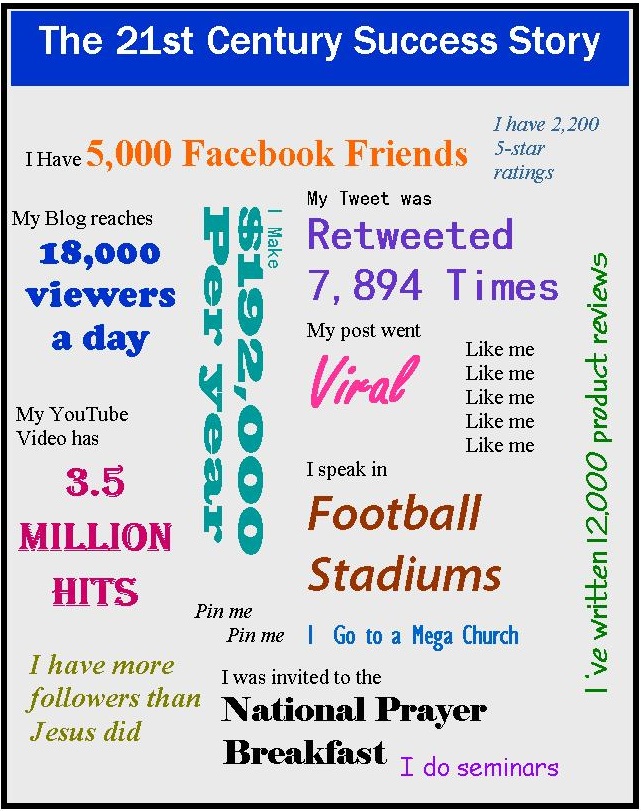
We are human beings, with all the positives and negatives associated with that state: we can be greedy, selfish, unkind, demanding, judgmental, perverse, thoughtless, crafty, cunning, and hateful, and we can also be kind, compassionate, meditative, loving, generous, trusting, merciful and gentle: how much money we make, or what our title is, or whether or not anyone recognizes our name in a Tweet, are not the factors that affect who we are, and how we live — although, admittedly, the more money, power, and fame we command, the easier it is to slip into the first list, simply because those around us are more tolerant about our doing so.
We are made in the image of God, male and female He created us (Genesis 1:27), and as children of God, we have an Elder Brother who is the firstborn among the dead (Colossians 1:18) who goes to prepare a place for us (John 14:3), where the rules on this planet, under which we struggle now, do not apply.
As Christians, let us do our best to not join the forces of darkness in applying those planetary rules, upon ourselves, or others. It is not our Father, but another father, who makes them.
Thank You
Thank you for joining me at This Woman Writes where I write about Christianity, and religion. The two are very separate things, and what we learn in churches, and from celebrity Christians, and through pop-Christian books, frequently has little to do with the truth.
Posts complementing this one are
Is Jesus the (American) Way, Truth, and Life?
Why Your Life on This Planet Means Something
Defining Success


















 This Woman Writes by Carolyn Henderson