Chickens, Dish Washing, and Keynesian Economics

You know, you wouldn’t think that Sicilian Buttercup chickens would have much to do with the U.S. economy, healthcare — yours or society’s — or even whether to wash your dishes by hand or use a dishwasher, but they really do.

This is a Sicilian Buttercup. It is not supposed to brood, hatch eggs, or be a good mother. Photo by Steve Henderson Fine Art

This is a Sicilian Buttercup. It is not supposed to brood, hatch eggs, or be a good mother. Photo by Steve Henderson Fine Art

The Sicilian Buttercup — which always sounds like something you’d have for dessert on your birthday — is a speckled brown and blond chicken that, according to chicken experts, is a lousy brooder.

This doesn’t mean that she’s not a thinker; actually, thinking isn’t a process associated with chickens of any breed. No, this means that Sicilian Buttercups will not sit on a clutch of eggs for three to four weeks and hatch them into chicks. They just don’t do that.

Except on our farm. And others, I’m thinking, because this piece of information, like so many facts hoisted and foisted upon us by experts every day, isn’t universally true.

This is the second Sicilian Buttercup, which is raising her chicks, which she is not supposed to have, in tandem with a second, hybrid chicken. Photo credit by Steve Henderson Fine Art

This is the second Sicilian Buttercup, which is raising her chicks, which she is not supposed to have, in tandem with a second, hybrid chicken. Photo credit by Steve Henderson Fine Art

The Son and Heir, who is as fascinated by chickens as he is by shooting arrows or reading about the Battle of Hastings, researched the breed and determined to add them to our eclectic flock. Source after source after source — both on the Internet and in chicken books — described them as beautiful, ornamental chickens that would never be mothers.

Well, they are, sharing between them and a third hybrid hen 12 chicks — another situation that isn’t supposed to exist, because conventional and expert wisdom, in source after source after source — assures us that chickens don’t share their chicks. One day, Sicilian Buttercup #1 has four chicks and her sister, parenting in tandem with the hybrid, has eight. Later in the afternoon the count is seven and five. That evening, six and six. The main thing that matters to me is that the final number adds up to 12. And with five cats lurking around, that’s always questionable.

Seeing is believing, sometimes. Photo credit by Steve Henderson Fine Art

Seeing is believing, sometimes. Photo credit by Steve Henderson Fine Art

While it’s a jump, or hop, from chicken parental dynamics to Keynesian Economics, the principle point — that there are a lot of people out there giving us either wrong information, or information that nobody can possibly know is veritably true — applies.

How many times do you open the paper or scroll through your e-mail and read, “This must be done to salvage our economy”? (Interestingly, “This” usually involves significant amounts of money being transferred to people who already have it, and have misplaced it, somehow.)

Or your doctor insists that, “You must take this pill, and there are no serious side effects.” But you have researched this medication, and you know, indeed that there are side effects, and you mention this to the doctor.

“If you’re not going to listen to me, then there’s no point in our talking,” he replies. End of five-minute consultation.

(I’m not making this up, by the way; this happened to a real person. I’m guessing it’s not an anomalous situation.)

There is much joy in dancing our own dance, thinking our own thoughts. Jubilee, original oil painting available at Steve Henderson Fine Art; open edition print at Great Big Canvas

There is much joy in dancing our own dance, thinking our own thoughts. Jubilee, original oil painting available at Steve Henderson Fine Art; open edition print at Great Big Canvas

Or the dishwasher versus hand washing — if you think that the health care situation is contentious, check out Does Using a Dishwasher Actually Decrease Water Use by One Green Generation, and make sure to read the comments. This would be lively action on C-Span, representing far more commentary and debate than we are accustomed to seeing in the hallowed halls of our lawmaking bodies.

If there is this much controversy on dish washing, why do we so trustingly believe what we are told about the big things? Is it because we are so emphatically, positively, confidently, and repeatedly assured of the “facts”?

Think.

Question.

Trust your instincts.

Trust your intelligence.

Don’t blindly accept everything you read or hear, and don’t forgo adding Sicilian Buttercups to your life because they won’t brood and hatch out chicks.

(Oh, by the way, there are still 12. Three and nine.)

Happy Mother’s Day, you wonderful mothers out there. My gift to you, The Ultimate Mother’s Day Gift.

Posted in Animals, Art, blogging, Culture, Current Events, Daily Life, Economy, Education, Encouragement, Family, frugal living, Green, Growth, home, homeschooling, inspirational, Life, Lifestyle, media, News, Politics, Random, self-improvement, success, Uncategorized | Tagged , , , , , | Leave a comment

The Ultimate Mother’s Day Gift

So.

You need to find Mom a Mother’s Day gift. The perfect one would be nice, but every year this eludes you.

Eldest Supreme and Small One. Original oil painting, Madonna and Toddler by Steve Henderson.

Eldest Supreme and Small One. Original oil painting, Madonna and Toddler by Steve Henderson.

I mean, what do you give this woman who bore you in the midst of great pain — whether in a delivery room with too many people milling about or by the phone, waiting for a voice on the other end to say, “We have a baby for you,” or whatever her own unique experience of anticipating, longing for, and finally bringing you into her heart was.

And once you were there, you carved a great big space, but that was easy, because her heart was soft and malleable where you were concerned, even though she could be most unreasonable about your coming in two minutes after midnight (Why was she always up? And how is it that the rest of the household could fall asleep?)

You know, she never has forgiven that child, so many years ago, who didn’t invite you to the class birthday party. I think she talks with the child’s mother, but only politely, when they run into one another at the grocery store.

More than once, Mom embarrassed you dreadfully during the regional swim meet, when you could hear her yell over the crowd’s roar, every time your head came up for air. You came in seventh.

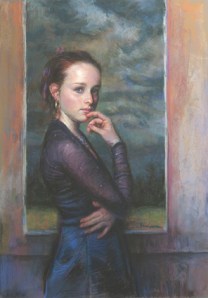
College Girl. Original pastel portrait, On the Verge, by Steve Henderson

College Girl. Original pastel portrait, On the Verge, by Steve Henderson

“You’re always a winner in my book,” she said.

So what do you get this woman, who loves you just because you are who you are, who isn’t afraid to tell you that you behaved rudely back there, but in the next breath gives you that look that makes you feel safe and panicky at the same time?

A cruise? Mom more than anyone knows that you’re not made of money. If you seem in danger of forgetting, she reminds you.

A card? Is that too cheap? She always taught you to be generous and to invest your life in people, not things.

Flowers? Dinner out? A phone call? Socks? Books? A gift certificate?

Yes, that last one’s good. But a gift certificate to where?

Maybe I can make this easier for you. If you want to know what to give Mom, start by realizing — fully and completely — what she has given you.

And what she has given you is your freedom to fly, little fledgling, even though what she wants more than anything is to be with you, be near you, be a part of your life forever and ever. That little girl and little boy — newborn, six-years-old, pre-teen, fifteen (do you have any idea how difficult you were at fifteen?), the young adult off to college or a new apartment or a job — but away — for the first time — all of those people still reside in her heart, and there is room, so much room, for the rest of you.

But she lets you go, because there are two things she wants for you more than anything:

The Son and Heir. Original oil painting, Youth, by Steve Henderson

The Son and Heir. Original oil painting, Youth, by Steve Henderson

She wants you to be happy. That’s why those 11 p.m. phone calls, the ones after the big breakup or the job loss or just because you’re agonizingly lonely — are so hard on her. Don’t get me wrong — she wants you to call, but it would be nice if, a week later when things are back to normal, you let her know?

And she wants you to be good. That’s what she raised you to be, you know: a caring, thoughtful person who speaks gently to animals and squats down to listen to children at their eye level. Although she pushed you, all those years, to keep your grades up, it really doesn’t matter to her if you’re a doctor or a writer or a grocery store clerk or a lawyer (an honest one, mind you!) or a nuclear physicist or an artist. Do you make the world a better place because you’re in it?

She does, you know, or at least, your world.

Tired of Being Youngest. Original oil painting, Grace, by Steve Henderson

Tired of Being Youngest. Original oil painting, Grace, by Steve Henderson

Tell her you love her. Call her, if you live far away. Write her a note, if you write better than you speak. Get together for dinner, if you’re close. And stay close, in your hearts, however you can, as much as you can. That’s what she wants more than anything in the world.

Mom, I love you. You let me go, but held me tight.

Progeny of mine — I love you.

Deeply. Unreservedly. Unabashedly. Joyfully. Eternally. You are my ultimate mother’s day gift.

Posted in Art, Beauty, blogging, children, Christian, Culture, Current Events, Daily Life, Economy, Encouragement, Family, finances, frugal living, Growth, holiday, home, homeschooling, inspirational, Life, Lifestyle, Motherhood, News, Parenting, Personal, Relationships, shopping, success, Uncategorized | Tagged , , , , , , | 4 Comments

Light and Hope versus Darkness and Despair

From the Start Your Week with Steve newsletter of Steve Henderson Fine Art:

Steve Says:

Light, joy, color, happiness, beauty -- these surround us, and they are worth painting. Evening Waltz by Steve Henderson

Light, joy, color, happiness, beauty — these surround us, and they are worth painting. Evening Waltz by Steve Henderson

“In art school, we were repeatedly told to find our own style and paint it, which sounds like great advice if only the people giving it had adhered to their words.

“One professor frequently said, ‘Don’t listen to anything I say,’ and before the breath was out, added, ‘Just do everything I tell you and you’ll become a successful artist.’

“So much for finding our own style and painting it.

“But art school is a long time ago, and life has intervened much in between — family, friends, jobs, gardens, holidays, laughter, tears — and the composite of these experiences has done more for establishing what I paint and how than any words, wise or not, from any professor.

“I seek, look for, and paint the beauty of the world around us. I use and celebrate color because it’s there, frequently hidden, but there, just like beauty.

“I choose to extol and celebrate the good things in life because it’s too easy to wallow in the bad, sad, dark elements, to the point that they swallow up our energy and joy.

“No one can deny that ugliness exists. But in acknowledging this truth, it is too easy to ignore another, more important truth:

“Beauty exists. Given attention and care, it can thrive. I choose to use my gifts to focus on goodness, light, hope, and truth.”

Read more and subscribe to the free, weekly Start Your Week with Steve Newsletter.

Posted in Art, Beauty, blogging, Culture, Current Events, Daily Life, Encouragement, Growth, health, home, inspirational, Life, Lifestyle, News, Relationships, success, travel, Uncategorized, vacation | Tagged , , , , , , , , | Leave a comment

Artisan Cheese and Twinkies

You’ll be happy to know that the batch of cheese I’m working on this morning is turning out much better than what I made on Sunday.

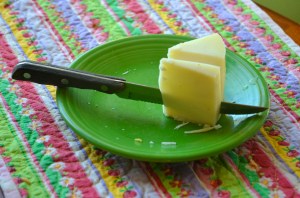
Homemade cheese -- photo courtesy of Steve Henderson Fine Art

Homemade cheese — photo courtesy of Steve Henderson Fine Art

I know. I didn’t tell you about Sunday’s failure because I didn’t want to ruin your day the way the cheese had the potential to ruin mine. I say “potential,” because any time you make anything at home — cheese, bread, soup, cookies, Kombucha — you expect variables.

I’m not Kraft. Or General Mills. Or Wonder Bread.

Which is good, because while it means that I don’t have a clinically sterile industrial kitchen that puts out the exact same product, time after time after time, what I make and bake and create doesn’t taste like what comes out of those clinically sterile industrial kitchens.

You may not believe this, but it took me years to figure this out, and that only because a wise woman who was married to a Frenchman and who had lived in Europe (why is it that people who live in Europe know so much more about good food than Americans do? Is it because they eat it?) told me this, about cheese:

“In Europe, each home’s cheese is unique to that home and its cheese maker. Nobody expects their cheese, or their bread, to taste like anyone else’s, and they celebrate the uniqueness of each craft person’s creation.”

Food, like people, is unique. We can celebrate this. Mesa Walk, available as a signed, limited edition print through Steve Henderson Fine Art.

Food, like people, is unique. We can celebrate this. Mesa Walk, available as a signed, limited edition print through Steve Henderson Fine Art.

Here in America we consider food a success when it looks, and tastes, like what we could buy in the store. We agonize because our Twinkies don’t look like the real thing, (and no, I have never tried to make a Twinkie at home).

Elsewhere, food is considered successful when it tastes good. How odd.

No, actually what’s odd is that so many of us consider mass produced food products, often made from inferior ingredients compensated by sugar, fat, salt, and artificial flavorings, to be real, while what we create in our kitchens, with our time, our hands, our labor, and our love, to be lacking somehow.

And while it’s true that some people aren’t the best cooks in the world (I’ve eaten at their houses; have you?), as long as a person is one step above truly dreadful, they can generally create, with decent quality ingredients, something as palatable as the stuff from a can or a box.

And if they’re two or more steps above dreadful, and the closer they approach really darn good, they turn eating from a daily task to an event. That’s what eating is in our household, with Tired of Being Youngest and her culinary school practice sessions in our kitchen, and with me — 40 years in the kitchen and counting, fresh produce from the Norwegian Artist’s garden, eggs from the chicken, and milk from the goats — looks like.

Goats provide wonderful milk for making artisan cheese. Fenceline Encounter by Steve Henderson.

Goats provide wonderful milk for making artisan cheese. Fenceline Encounter by Steve Henderson.

You know, you may be a really darn good cook, only you don’t know it yet. Pick up some quality ingredients — fresh produce, artisan cheese, farm fresh eggs, organic butter — and scrambled eggs will be transformed from a pale, quivering mass of sliced product on your plate, slathered with ketchup to disguise the texture, to a simple, yet sublime meal.

To start with, make it easier on yourself by creating something that isn’t readily recognizable as a store product — in other words, don’t try to bake Twinkies. You can’t get ahold of Sodium Stearoyl Lactylate, Sodium Caseinate, or Mono and Diglycerides anyway — and, um, do you really want to?

Someday, you may get so excited about quality ingredients and the food you can make from them that you’ll track down a goat so that you can get fresh milk from which to make your own artisan cheese.

Or not.

But when you make your own food, in your own kitchen, you connect with thousands of years of the human experience, most of which has been lived beneficially and well without Twinkies, yellow/orange macaroni and cheese, frozen orange chicken in a bag, or bread product that, when you squish it into a ball shape, it stays that way.

And bounces.

In addition to finding Steve’s original fine art paintingssigned, limited edition prints and inspirational posters on the Steve Henderson Fine Art website, you can find open edition prints of his work at Great Big Canvas and Light in the Box.

Posted in Art, blogging, cooking, Culture, Current Events, Daily Life, Encouragement, Family, Food, frugal living, Green, Growth, home, Humor, inspirational, Life, Lifestyle, News, Personal, self-improvement, success, Uncategorized | Tagged , , , , , , | Leave a comment

Deception, Deceit, Dishonesty — Is This Our 3-D World?

Younger women — under 35 — may find this odd, but not so many years ago, a married woman did not appear on a credit card account as a real person.

nostalgia 1940 vintage woman victrola victorian art steve henderson

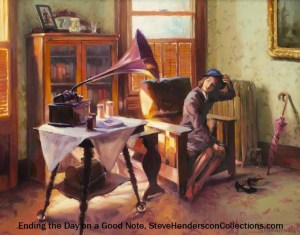
Fashions and trends change, driven by people who make money off them, but human nature is a constant. Ending the Day on a Good Note, art print from Steve Henderson Collections.

As the wife of her husband, she was presumably allowed to use the card with his permission, but she didn’t really count, and she certainly couldn’t make changes, dispute charges, or talk to a customer service representative (who were real people, not computerized voices) about the account. If she could get a card with her name on it, that was a coup indeed.

I’m not that old, you know, and I remember living under this system. And I am remarkably grateful that things have changed.

Things do change, these days incredibly quickly, and what was the norm ten years ago is archaic now. In the case of credit cards and women being recognized as real people, the changes are positive, but sometimes the changes are so many, and so fast, that they overwhelm.

Before my father passed away, we watched movies together — on TV, not the phone or computer — and after a commercial break he would ask me, “What, exactly, were they selling?”

Frequently, I could not answer. The commercial featured lights, pulsating music, sullen women and metro-men, terse commentary, and a web address at the end, but what was being hawked could have been a car or cookies, software or underwear, corn or computer chips — the emphasis was on emotion as opposed to information; sensation, not knowledge.

highland road country landscape rural wilderness travel steve henderson painting

To process all the information we’re given, we need time in a quiet still place, a place that allows for thinking. Highland Road, art print from Steve Henderson Collections.

So, also, is much of life’s ongoing change presented to us: “news” consists of short bites of sound and imagery, remarkably similar to a car commercial, and any major event is long on commentary and short on actual facts.

In the end, we are bullied and pummeled into accepting specific opinions on guns, gender definitions, marriage, freedom of speech, genetically modified food, domestic and foreign terrorism, medical care, health insurance, or how many eggs we should eat a week not based on actual information, but on carefully chosen, selectively screened “human interest stories.”

If there are stories about humans who do not mesh into what a particular media source thinks we should be hearing, then they are of no interest.

But within this panoply of noise and pressure and mis-information, one thing does not change, and that is human behavior, which has a tendency toward greed, avarice, selfishness, and deceit, and requires conscious decision on each individual’s part to develop and nurture our better side of compassion, thoughtfulness, humility, mercy, honesty and kindness.

Good or bad, the results of human behavior are fruit, and if we remember that, no matter what anyone says, apples come from apple trees, and oranges come from orange trees, then we can eliminate some of the confusion caused by everything that we are reading and hearing and experiencing in this rapidly changing world of ours.

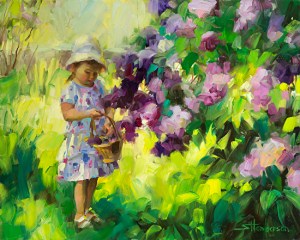
country spring garden lilac bush girl basket innocence steve henderson art painting

Apples grow on apple trees, and lilacs grow on lilac bushes. Lilac Festival, art print from Steve Henderson Collections.

  • If someone implies — or states — that you are stupid, or insensitive, or threatening, or dangerous because you believe differently from how he believes that you should believe — then he is manipulating.
  • If someone says one thing but does another — she’s lying.
  • If someone pushes you — or Congress — to make a fast decision before all of your questions have been answered, and accuses you of standing in the way of progress when you hesitate — then he is bullying.
  • If someone presents some of the facts, but deliberately holds back on others, — she is practicing deceit.

Manipulation, lying, bullying, deceit — these are bad fruits that we accept as norms in our society, but we don’t have to. First, we start with ourselves — identifying and seeking the good elements of our nature and enabling them to grow. Then, once we recognize these attributes, we look for, and demand them in others — our businesses, our schools, our churches, our government.

And when someone tosses a handful of raisins in our face and tells us that they are watermelons, we don’t believe them.


Posted in Art, Beauty, blogging, Business, Culture, Current Events, Daily Life, Economy, Encouragement, Family, finances, Growth, home, inspirational, Life, Lifestyle, marriage, News, Personal, Random, shopping, Social Media, success, technology, Uncategorized | Tagged , , , , , , , | 4 Comments

Your Lawn and Your Life

From the Start Your Week with Steve newsletter of Steve Henderson Fine Art:

Steve Says:

“Before we lived in the country, we lived in town, and one year I decided to rework the entire backyard lawn with a maddox. Carolyn teases me, but I prefer to get my exercise by doing something practical.

Depending on where and how you live, your lawn can look different from anyone else’s. Highland Road by Steve Henderson

“After weeks of chopping and leveling, I was ready to plant the new grass, and while what we really wanted was a natural mix of clover and alternative greenery, as opposed to the conventional blend, such a customized mix was beyond our budget. So we planted the conventional lawn, which was shortly dotted and decorated with dandelions and natural clover.

“While our neighbors were displeased, we liked the look. We kept it trimmed and watered, and smiled at the yellow highlights interspersed with violets and white clover blossoms.

“When we moved out on our acreage, a lawn was the last thing on our minds. We pretty much mowed down what was there — clover, dandelions, interesting grasses, herbs, and other greenery — and called it our lawn. Ironically, what we mowed down and announced as our lawn closely resembles the expensive, customized mix that we wanted when we lived in town. Without even trying, we achieved the ‘natural’ look by simply keeping what was naturally there. People have asked us where we purchased our customized mix, although they still frown at the dandelions.

“We look at our lawn as an extension of who we are — unconventional, with a sprinkling of weeds.

“I often wonder, where did this concept that lawns, all lawns, must look like golf courses come from? And why do so many people feel compelled to go along with the expected flow of neighborhood expectations?

“More importantly, do we live our lives with the same attitude with which we care for our lawns? Do we shudder at the clover and the violets and the dandelions, or do we shrug and say, I keep it trimmed and watered, and it looks nice enough. This is what it is.

This is what I am.

“Live your life. Be yourself. Keep the dandelions and the clover and the herbaceous, interesting grasses. It’s more natural.”

Read more and subscribe to the free, weekly Start Your Week with Steve Newsletter.

Posted in Art, Beauty, blogging, Culture, Current Events, Daily Life, Encouragement, Family, frugal living, Green, Growth, home, inspirational, Life, Lifestyle, News, Personal, self-improvement, success, Uncategorized | Tagged , , , , , , , , , , | 6 Comments

Rejecting or Despising One Another

Today’s article was supposed to be about a magazine I used to write for, and how the owners — purportedly Christian — ran the place pretty much along standard, looks-like-any-other-business-these-days lines, but I couldn’t get the tone outside of the I’m right; they’re wrong mode.

"I'm right; you're wrong." Cats are especially good at non-verbally communicating this sentiment.

“I’m right; you’re wrong.” Cats are especially good at non-verbally communicating this sentiment.

So I thought of another topic that has to do with Christianity, that of our tendency — as Christians — of rejecting or despising one another.

If you’re not a Christian and you’re thinking, “What? They reject and despise each other, not just me?” I understand. We do have a problem with this whole love and acceptance thing, but people are messy and noisy and they drive too slow and they say unkind things and they never change the toilet paper roll and we, as Christians, too frequently get sidetracked.

One of our major sidetracking issues has to do with external signs of our Christianity — what we wear; how we wear it; what we eat; what holidays we celebrate — or don’t celebrate — and how; what we read or watch on TV; if we go to church services and how often. If there’s any outer, tangible way of differentiating ourselves from one another, you can bet we’ll do it.

Those of us who propound certain behavior as being obligatory, look down upon, or reject, those who don’t.

And those who don’t have a problem with a particular activity or outer sign of religiosity, despise those who actively and aggressively push one.

Sometimes, we're the stronger, wiser person; sometimes, we're the weaker, smaller one. Afternoon Tea by Steve Henderson.

Sometimes, we’re the stronger, wiser person; sometimes, we’re the weaker, smaller one. Afternoon Tea by Steve Henderson.

Don’t blame me for this — the apostle Paul mentions the matter in Roman 14, when he says, “One person believes he may eat anything, while the weak person eats only vegetables.

“Let not the one who eats despise the one who abstains, and let not the one who abstains pass judgment on the one who eats, for God has welcomed him.”

When I read this, a most unpleasant thought slammed me in the face — “I am one of those people who despises others. And this is not okay.”

Well, that’s certainly a revelation. I knew I recoiled at people who tsked me for my language, shook their heads when they learned my reading tastes, chastised me for sleeping in until 7:30 when all the rest of God’s people were up at 4.

These are the same people who murmured, “No smoke without a fire,” when bad things happened in our life, some going so far as to say (behind our backs) that it all started when we let our six-year-old watch James Bond movies.

And yes, I despise people like this.

And they reject me.

And neither one of these attitudes is in line with Jesus’ exhortation that we love one another, as evidence to the rest of the world that there truly is something different about us, and Christianity is something worth seeking and finding because it offers hope, peace, love, charity, mercy, and acceptance.

You know, nobody said that loving one another would be easy, but nobody said we had to do the whole thing under our own power and abilities either. Oddly, the more we think about God and His goodness, as opposed to our neighbor and his irritating habits, the easier it is to love — or at least tolerate — our neighbor.

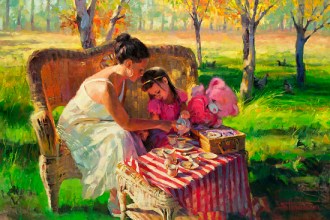
Sophie and Rose by Steve Henderson

Our homes and families were designed as places for us to practice this loving one another concept. Sophie and Rose by Steve Henderson.

This is where families come in as an incubationary means of practicing this very difficult task of loving one another. Not all of us are as easy to live with as others of us, but we overlook a lot because we all belong together, and we may very well all be together in the same room, come the next big holiday.

So if you’re a Christian, let’s work on this. I’ll do my best not to despise or reject you. I’d appreciate it if you’d do the same for me, but if you don’t, that doesn’t let me off the hook.

Posted in Art, blogging, Christian, Culture, Current Events, Daily Life, Encouragement, Family, Growth, home, inspirational, Life, Lifestyle, Personal, religion, self-improvement, success, Uncategorized | Tagged , , , , , , | 4 Comments

Wind Power — for and by Small, Ordinary People

Sunday I spent the entire day reading.

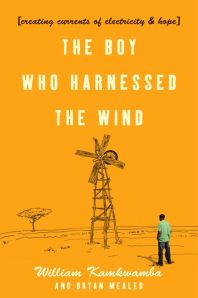
For hours and hours I absorbed myself in The Boy Who Harnessed the Wind, co-written by William Kamkwamba, the proponent of the tale, and Bryan Mealer. I was drawn to the book at my local library because of the ratty-tatty windmill on the front, which resembles something I want the Norwegian Artist to construct on our own land.

The Boy Who Harnessed the Wind

I almost put it down when I saw the recommendation by a Mr. Extreme Green sort who isn’t remotely interested in individuals empowering themselves by, literally, producing their own power, but after a moment I realized that the reviewer probably never actually read the book, any more than he chooses the clothes he wears to public and state occasions. (Is he a lumberjack today? or a college professor?)

But back to the real hero: Kamkwamba is the only son of a sustenance farmer in Malawi, and his story is one of hardship and privation, drought and starvation, political corruption and the result of its greed, and . . . hope. Forced to drop out of school because his parents couldn’t pay the fees, Kamkwamba pokes around in a junk pile, ignoring the taunts of the people around him (isn’t that what most creative people do?) and the alarmed looks of his mother.

“He’ll never find a girl to marry him! And how will he support her?” she wails. Amazing. Half the world away and all mothers think the same.

“Leave him alone,” his father advises. “Let’s see what he will do.”

You don't think about it when you've got switches to flip, but without electricity, unless there's a moon, you don't see much. She Danced by the Light of the Moon by Steve Henderson

You don’t think about it when you’ve got switches to flip, but without electricity, unless there’s a moon, you don’t see much. She Danced by the Light of the Moon by Steve Henderson

What Kamkwamba eventually does do is construct a working windmill (what he calls an “electric wind machine”) out of all that recycled junk, bringing light into his family’s extremely simple home. The bulbs are small, the light feeble, but it is light, enabling the family to stay up past 7 p.m., when darkness sets in.

“Who goes to bed at seven in the evening?” Kamkwamba asks in the book. “Well, I can tell you, most of Africa.”

Hoping to keep up with his studies in the event that he could return to school, Kamkwamba discovers the town’s library — three shelves of donated books ranging from novels to textbooks. He becomes the only patron to check out, renew, and recheck out Explaining PhysicsUsing Energy, and Integrated Science, the three resources he exhausts for their information on not only wind energy but water pumps, refrigeration systems, and ways to make alternative fuels:

“Lately, I’d become particularly curious about (these),” this uneducated, unlearned, unschooled, and unlettered son of a sustenance farmer writes. While my first thought was, “Imagine what he could do with a proper education,” my second one was wiser — “Look at what he did without one.”

Kamkwamba’s in school now — the world discovered him and was properly impressed with his accomplishments — and it is to be hoped that the hardworking genius is allowed to continue to grow, reach, dream, and achieve as opposed to conform, like so many of us in the First, modern world.

Yes, You Can --  a timeless, true message for us all to keep in mind. Inspirational poster by Steve Henderson

Yes, You Can — a timeless, true message for us all to keep in mind. Inspirational poster by Steve Henderson

So also do I hope for Kamkwamba’s humility — his voice is simple, fresh, uncomplicated, kind — expressing concern for his family and his people, and desiring to improve their lives with the gifts that he has been given and so beautifully uses.

It’s a difficult balance, maintaining one’s goodness as fame increases, securing the necessary funds without paying for it with one’s soul, but this is, after all, a man who built a treasure out of elements he found in a junkyard.

If you don’t have plans for this coming Sunday, allow me to suggest one: find this book, snuggie-up on the couch, and travel to Africa.

The Jane Austen Driving School by Carolyn Henderson

Posted in Art, blogging, books, Christian, Culture, Current Events, Daily Life, Education, Encouragement, Family, frugal living, Green, Growth, home, inspirational, Life, Lifestyle, News, Personal, self-improvement, success, technology, Uncategorized | Tagged , , , , , , , , | 2 Comments

Harvesting Rainwater and Harnessing Wind

From the Start Your Week with Steve Newsletter — 

Steve Says:

“They say that if you’re married to someone long enough, you eventually start to look like them. They say that about dog owners and their dogs, too, so I question colloquial wisdom.

“Although Carolyn and I don’t look alike, sometimes we find ourselves reading the same things — lately, it’s been about innovative people overcoming impossible odds in Africa.

Water is a precious resource that enables beautiful things to grow. Lilac Festival, original oil on panel by Steve Henderson

Water is a precious resource that enables beautiful things to grow. Lilac Festival, original oil on panel by Steve Henderson

“The person inspiring me is Zephaniah Phiri Maseko of Zimbabwe, who supported his family of eight on seven acres of dry, frequently draught-stricken land. Through observation, analysis, and a lot of hard work, Maseko has ‘harvested’ the rainfall available to him yearly and transformed his parcel into an oasis of abundance. You can read more of his story in Brad Lancaster’s Rainwater Harvesting for Drylands and Beyond.

“Carolyn’s superhero is William Kamkwamba, the only son of a Malawi sustenance farmer and one of a family of eight. Kamkwamba achieved international recognition as The Boy Who Harnessed the Wind, building a working windmill from junkyard scraps, despite draught, lack of schooling, national starvation, and a cholera epidemic.

“Both Maseko and Kamkwamba were considered modern-day Noahs. Mocked and taunted by neighbors, they persevered despite being called crazy. Once they succeeded, however, they were called geniuses.

“Are you a modern-day Noah? Do you find yourself being talked about in a not necessarily positive way, because of your crazy ideas? It’s hard when you haven’t reached the success part, the part when you’re called a genius. But you keep at it, because you believe what you’re doing.

“Be encouraged by the stories of Mr. Maseko and Mr. Kamkwamba and know that you, too, have good work to do, and good ideas to share.”

“Yes, You Can.”

Read more of the Start Your Week with Steve Newsletter. It’s free, weekly in you e-mail inbox, and easy to subscribe to.

Fine Art by Steve Henderson

Posted in Art, blogging, books, Business, Christian, Culture, Current Events, Daily Life, Economy, Education, Encouragement, Family, frugal living, Green, home, inspirational, Life, Lifestyle, News, Personal, Random, self-improvement, success, technology, Uncategorized | Tagged , , , , , , , , | 4 Comments

A Dead Mouse on the Desk

Despite living the simple life of milking goats and knitting lace and baking bread and participating in all those homey, warm, homesteading goodness activities, I do spend a significant portion of my day on the computer.

Believe me, if it had been a real dead mouse, you would have heard my shrieks. Photo credit Steve Henderson Fine Art

Believe me, if it had been a real dead mouse, you would have heard my shrieks. Photo credit Steve Henderson Fine Art

Which isn’t simple at all. Or homey, warm, and sweet.

Yesterday I faced a day of updating our art website when I found that my wireless mouse was shutting off on a regular, itinerant basis. The initial solution to the problem was straightforward — I simply flipped the mouse over, turned if off, then turned it on again. It worked great for 35 seconds, then shut off.

I pursued this “solution” for 20 minutes, at which point I imploded.

“I’m calling the computer guy,” I announced to the Norwegian Artist, who has the remarkable gift of walking into a room with an exasperated me in it, assessing the situation, and remaining calm. One of us has to.

“Have you looked up, ‘Wireless mouse keeps turning off?'” he suggested.

Um. No. I imagine that would be cheaper.

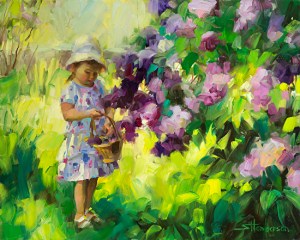
Life, for very young children, can be very simple. We can learn from this. Lilac Festival original oil painting by Steve Henderson Fine Art

Life, for very young children, can be very simple. We can learn from this. Lilac Festival original oil painting by Steve Henderson Fine Art

Googling, or Binging, the sentence gives you a page full of suggestions, many of which are incomprehensible to people like me, and it looked like it was going to be a call to the computer guy after all when I hit the second page and saw,

“Wireless mouse turning off — batteries could be low.”

Batteries? These things use batteries?

Yes, they do — two double A’s. In no time the Norwegian had the batteries replaced and the mouse working again.

Rarely are life’s solutions so simple.

But come to think of it, frequently life’s solutions are simpler than we allow them to be:

  • Stop.
  • Assess the situation.
  • Walk away from the problem for a minute and pour a cup of tea.
  • Share the burden. I know, not all of you have a Norwegian Artist, but there must be someone in your social circle who thinks clearly.
  • Try the obvious before the convoluted.

These five bullet points, while they may not lead to the solution, go a long way in not drawing us away from it, and when I practice them, I generally achieve success more often than I don’t.

The hardest bullet point for me is the one about sharing the burden, because — as a highly driven, over-achiever who doesn’t believe in perfectionism but insists upon really damn good — I see it as a sign of failure in my ability to think, analyze, propound, and move forward when I can’t solve the problem on my own.

Why do we feel as if we have to do everything on our own? Sharing the burden lightens the load. Seaside Story, original sold, prints available.

Why do we feel as if we have to do everything on our own? Sharing the burden lightens the load. Seaside Story, original sold, prints available.

But I never do, you know — solve the problem on my own. The latest issue is cheese — why the last round I made with our goats’ milk is hard and crumbly, and why the curds didn’t stick together the way they should have. Dining room conversation these days revolves around rennet, buttermilk culture, whey temperature, and the over stirring of curds, but the result continues to be cheese that is better grated than it is sliced.

Which brings us to a final bullet point:

  • Don’t give up. The solution may take time, experimentation, and perseverance. In the meantime, adjust the menu to incorporate grated cheese.
  • Limited Edition Prints by Steve Henderson
Posted in Art, blogging, Culture, Current Events, Daily Life, Encouragement, Family, home, Humor, inspirational, Life, Lifestyle, marriage, News, Personal, self-improvement, Uncategorized | Tagged , , , , , , | 3 Comments