The Privacy of Our Minds

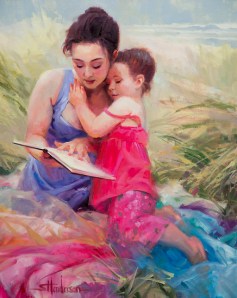
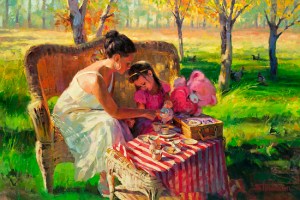
Privacy, like freedom of speech, is a valuable commodity? right? treasure? of which we are seeing less and less these days. Lady of the Lake, original oil painting by Steve Henderson; licensed open edition print at Great Big Canvas.

Lately, every time I open the mail from a government agency, or a health care provider, or a utility entity, I find an extra piece of scrap paper to write my grocery list on — a privacy notice stating how important my privacy is to these people, and how valuable information about me will not be shared with anyone but . . . appropriate organizations or departments.

Which means that I pretty much have no privacy at all, but I do have a lot of scrap paper.

In a world ruled by bankers and lawyers, government bureaucrats and insurance agencies, media moguls and societal engineers, strengthened by the IRS and TSA, Homeland Security, and a host of other cleverly but misleadingly named associations, divisions, administrations, boards, branches, commissions, and bureaus — somebody is always asking questions and demanding information on a worksheet, application, survey, or form.

When I’m not being asked questions, I am not-so-delicately being told how to think — about mandatory insurance (it’s Constitutional), genetically modified organisms (only alarmists worry about this), the state of our economy (it’s just super!), global warming (oh wait, we call it climate change now), and belief in God (it’s a psychological aberration, and people who pursue this are dangerous indeed).

And while we still have freedom of speech — sort of — to voice our opinions to the contrary, the whole concept of “hate speech” — which has open-ended potential to embrace anything the people in charge says it does — increasingly encourages many people to just shut up, and they keep their thoughts to themselves.

Made in the image of an intelligent God, people continue to think. Queen Anne’s Lace, original oil painting by Steve Henderson; licensed open edition print at Great Big Canvas.

Thoughts, however, are funny things. People continue to think them, and while they may not speak out openly — because they are ridiculed, which is the climate in which we find ourselves now, or because they are harassed or persecuted, which happens in “other” countries — people will and do continue to think opposite to the way that they are told.

In the privacy of our minds — which technology has not yet figured out how to control, manipulate, track, dictate, plot, graph, manage, regulate, dominate, or restrain — we are free to disagree with what we are taught. When a movie character announces, “Green and red are the same color!” we can think, “No, they’re not,” or when the president of an organization says, “This is a good program and everyone loves it,” we can think, “You lie!”

For now, many of us can still say these things aloud, but circumstances change, gradually and quickly, and the world we live in 20 years from now may look very different from the world we live in today.

The world is a beautiful place, but it is not our true, eternal home. We seek peace in the midst of pain. Peace, original oil painting by Steve Henderson.

But if you are a Christian, the world has never been a place where you fit in. You are weird — a psychological aberration — because you believe in an invisible Person who is everywhere, knows everything, and is in complete and total control. And you talk to Him — in your head, where your thoughts are private and only the two of you know what they are.

Understand the value of that. Get into the habit of talking to God — in your head — and asking Him about things you don’t understand. Read the Bible — on your own — and question and analyze and think about and meditate upon what you read. Gain confidence in your intelligence and acumen, and filter everything around you through your understanding of God’s ways versus Man’s, Media’s, and Mammon’s.

Seek solace in thought, meditation, and prayer, and strengthen your relationship with God. Catching the Breeze, original oil painting by Steve Henderson sold; licensed open edition print at Great Big Canvas.

Turn off the white noise, the TV, the music videos, the network news, the clamoring voices, and allow yourself to become comfortable with silence.

In other words, think. Learning to think for ourselves is the best defense we have against others doing the thinking for us, and when and if the day comes when we are no longer allowed to speak, we can still think, and by that, not be conquered and cowed into automatons.

In so many areas, our privacy is a shredded remnant of what it used to be. Treasure what you have left, and strengthen it.

Think.

Join me Wednesdays at This Woman Writes for Contempo Christianity; you can also find me at BeliefNet’s Commonsense Christianity. Please feel free to sign up to follow my blog at either site. You can do so at the top right of This Woman Writes (this site) or near the top right menu on Commonsense Christianity (it’s a little section above Categories that says, “Subscribe to Commonsense).

Recently at Commonsense Christianity:

The Atheist’s Cry to God

Christian Prosperity: What Does It Look Like?

Baaaaaaadddddd Christians — Redeemed!

Special Feature: 10 Ways to Be a Successful Christian (my concession to the bullet-pointed list)

Posted in Art, blogging, Christian, Culture, Current Events, Daily Life, Encouragement, Faith, Family, Growth, home, homeschooling, inspirational, Life, Lifestyle, media, News, Personal, religion, self-improvement | Tagged , , , , | Leave a comment

Recipe: Kale That’s Worth Eating

It’s bright, green, and delicious. Kale, with Yukon Gold French Fries and baked fish. Photo courtesy Steve Henderson Fine Art.

I chatted with a man the other day who announced that he had made kale a part of his life:

“I throw it in the juicer with celery and carrots and cabbage and drink it for breakfast every morning.”

Blech.

But he was smiling and happy, so I wasn’t about to put a damper on the start to each of his days, especially since they used to commence with coffee and a doughnut.

But if you, like me, like to chew your food, consider this simple, quick recipe for kale, which is one of those healthy, powerhouse vegetable foods we all feel guilty about not eating. It’s remarkably easy to grow in the garden, and stays around for a long time.

This recipe is one of those last minute things I toss on while the Yukon Gold French Fries are baking and the Breaded Chicken is almost done:

Kale That’s Worth Eating — serves 4 as a side dish

Ingredients:

6-8 leaves kale, washed and cut into ribbons

This recipe is the kind that makes you feel happy and content, because it’s good, and good for you. Enchanted, original oil painting by Steve Henderson; licensed open edition print through Great Big Canvas.

3 tablespoons coconut oil

1 teaspoon curry powder (this is ubiquitous in the grocery store, and it’s good to have around to toss in random foods for a different, more exotic taste)

1 teaspoon garam masala (you can make this yourself by grinding, in a spice or coffee grinder, 1 teaspoon black peppercorns, 4 black cardamom seeds, 1 stick cinnamon, 1 teaspoon cumin, and 1/4 teaspoon cloves until fine; otherwise, you can find this in the spice section of your grocery. If you really don’t want to take the trouble, replace the garam masala with an extra teaspoon of the curry powder, above)

3/4 cup water

Over medium heat, melt the coconut oil and heat it until it’s really hot, but not smoking. Add the curry powder and garam masala and stir, frequently, for 3-5 minutes until the spices are aromatic and slightly browned, but not burnt.

Stir in the kale and coat it with the oil. Add the water, cover, and let cook over medium heat for 5-8 minutes, until the kale is wilted and soft — you don’t want it too crunchy, but you don’t want it so overdone that the whole mass turns grey. Add salt to taste — the less you eat out of boxes, the less salt you find that you need to make the food palatable.

That’s it. And you don’t have to drink it.

Love love love those people God has blessed you with in your life. Seaside Story, licensed print at Great Big Canvas.

Join me Tuesdays for simple, easy, quick recipes that, for the most part, are good for you.

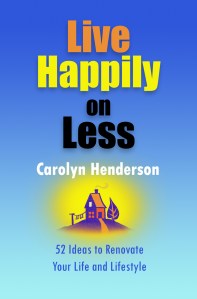
Find my book, Live Happily on Less, if you’re worried about money and wondering how to make it stretch.

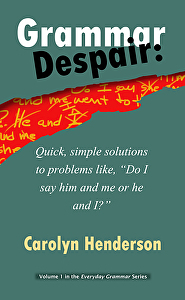
Find my other other book, Grammar Despair, if you want to write well, not sound like and idiot, and yet not spend hours and hours learning grammar principles.

Read my blog, Commonsense Christianity, at BeliefNet if you’re seeking or living a relationship with God, but are tired of much of what is being told to you these days.

Live independently. Think for yourself. Embrace the people you love. Be thankful for your many, many blessings, and if you don’t know what they are, ask God to point them out to you.

Join me Wednesdays on this site for Contempo Christianity; Thursday for thoughts on Homeschooling; Fridays for essays about Financial Health.

Pass me on. Look up my Norwegian Artist and consider buying art. Find me on Facebook.

Posted in Art, blogging, cooking, Culture, Current Events, Daily Life, dinner idea, diy, Encouragement, Family, Food, frugal living, gardening, Growth, health, home, instruction, Life, Lifestyle, News, recipe, saving money | Tagged , , , , | Leave a comment

Shop Like a Man

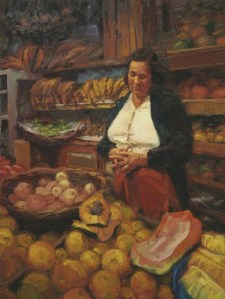
When the Norwegian Artist needs bananas, he buys bananas. And that’s it. The Fruit Vendor, original oil painting by Steve Henderson.

My husband, The Norwegian Artist, is a really boring person to go shopping with.

I’d say that he shops like a man, except that in this politically correct environment which spews smog over every thought we have and word we utter, I would sound like a dogmatic, diehard bigoted extremist spewing aggressively hostile expressions of hate.

So I won’t say he shops like a man, but those of you closely aligned to someone like this know what I mean:

He doesn’t go to a store unless he has to. When he does, he heads straight to the aisle with the item in question — antifreeze, or masking tape — and compares prices to quality. He makes his choice, decides that there’s nothing else he’s been in desperate straits about — socks, washers and bolts, light bulbs — and quickly checks out. And then he heads home.

End of the shopping expedition.

When he shops online, he does pretty much the same thing, but given that we both work on the computer all day, I sympathize that it’s not much fun, in our off time, spending even more time on the computer, looking around. He decides what he wants — stretcher bars to put canvas over so that he can create a painting — goes to the site, picks out the item and hits the checkout button.

The Norwegian Artist spends remarkably little time — and money — shopping, which is good. It’s just that you don’t create a date around that particular activity with this man.

If we’re going to stroll, we prefer doing it through the garden, as opposed to the aisles of the boxstore. Promenade, original oil painting by Steve Henderson; licensed open edition print through Great Big Canvas.

But if you want to save money, shopping like a man, or at least like the Norwegian Artist, is a good idea, because you don’t fill the cart with all the ticky tacky plastic items screaming at you from the aisles, gaudy Sirens calling to be taken home and stuffed in your already crowded house.

The other day I was in a store, heading purposefully toward the back to pick up, of all things, antifreeze (the Norwegian asked me if I minded doing an errand for him) and I found myself striding past colorful displays of stuff, all of which appeared to be 30 to 65 percent off and none of which, when I stopped to look at the items and consider if I wanted them, appealed to me.

I don’t need a plastic pitcher with pineapples on it, even if it is $5 instead of $10.

Same for the plate that looks like an alarm clock, the book of prayers in both Russian and English, and the tape dispenser cleverly disguised as a chocolate bar. While some of these are funky and fun, and all of them were on sale, if I bought everything that caught my eye — like a dog attracted to a laser point — I would, over time, spend a lot of money on items I don’t really need, probably won’t use, and will wind up stepping on because everything, in my house, at some point winds up on the floor.

I spend my time and money on meaningful things, not cheap plastic knick knacks. Shore Leave, original oil painting by Steve Henderson; licensed open edition print at Great Big Canvas.

I would far rather head straight to the anti-freeze and straight out, using the money I save to make a larger or more expensive purchase of something I really want — like a piece of Polish pottery (which NEVER winds up on the floor, by the way), a hank of yarn, or even a flattering item of clothing that fits perfectly and looks stunning on me. These purchases I will use and not step on.

Living life in a sensible financial manner does not mean that we never buy anything; it means that we buy wisely, and in a society with So Much Stuff, that’s a challenge. When all of your money goes toward impulse purchases of stuff, there is little left over for the real thing: items of luxury, elegance, and pleasing design (like paintings, say) that last, and bring pleasure, for a long time.

There’s nothing wrong with shopping being a pleasurable activity, and indeed, even the Norwegian Artist engages in it — you should see his book wish list. When you shop well, with sense, sensibility, discipline, and self-control, you build up a collection of beautiful things that you never thought you could afford, a little bit at a time.

Three thoughts for saving money:

Think about it — what organization could care about you, your life, or your family as much as you do? Look out for your own. Thoughtful, licensed open edition print by Steve Henderson.

1) Cook for yourself. I post fast, easy, tasty yet healthy foods in my Recipes section.

2) Think more independently. Question everything you’re told, and don’t trust that any organization — government, non-profit, medical, religious — is more concerned about you than it is about maintaining its own existence.

3) Check out my book, Live Happily on Less. Saving money is a lifestyle, not a series of bullet-pointed tips. I write about Finances every Friday, and list published articles in the Financial Health category on the menu.

This article was originally published in ThoughtfulWomen.org.

Posted in Art, blogging, Culture, Current Events, Daily Life, Economy, Encouragement, Family, finances, frugal living, home, Life, Lifestyle, marriage, Relationships, saving money, self-improvement, shopping, success, Uncategorized | Tagged , , , , | Leave a comment

Homeschooling and the Kitchen Wonderland

It takes a lot of cooperation and time to build a house. Sophie and Rose, original oil painting by Steve Henderson; licensed open edition print at Great Big Canvas.

Years ago, we built our house, literally. Before we could start that project, however, we finished renovating the barn — yes, I raised my kids in a barn, at least for two years — which we lived in while we were building.

The oldest child was 9. It quickly became obvious that if, after the day’s schooling was complete, I were going to be working on nailing things and sheetrocking walls, there wouldn’t be a whole lotta time left over for cooking.

As this minor inconvenience didn’t eliminate our need for eating, we decided that cooking wasn’t a bad thing for a 9-year-old to learn. Initially, I was far less excited about this than the 9-year-old, because I’m a good cook and I like to eat well prepared foods. Most 9-year-olds are not amazing chefs.

But she became one.

While I was always on site, my having a hammer in my hand meant that I was unable to hover, querulously critiquing everything she did and taking over the job before she got it started. And while this meant that, initially, some of the noodles were underdone, or some of the casseroles overbaked, or some of the vegetables grey and mushy instead of green and sprightly, we praised what was right and literally swallowed what was not.

It helps to have a relaxed attitude of laughter and happiness, whether you’re building a house or eating a novice cook’s food. Brimming Over, original oil painting by Steve Henderson; licensed open edition print at Great Big Canvas.

As time went by, she gained confidence and skill, and I gained wisdom in how to teach: hands off, as much as I could. I also lowered my standards — not because she, or any child, didn’t need good standards, but because the ones we start with as adults are frequently too high for a child to reach. So we wind up pushing the kid aside, taking over, and grumbling when no one seems to want to learn.

Learning to cook — which is something too many adults in our society don’t know how to do — is an important factor in any person’s education, because people who know how to cook eat well — and cheaply. These are not bad advantages to have in an economic climate that doesn’t look like it’s going to miraculously improve anytime soon.

Cooking also encourages independence, experimentation (and do remember that experiments frequently fail), and organization, and regardless of the size of your kitchen, you can pull together a team of you and your kids to address individual tasks for a composite whole.

While some of you will turn this into a unit study, and thereby legitimize it as proper and appropriate schoolwork, you can approach the activity in a more relaxed fashion and still reap many benefits. As with any subject, each child will approach it differently, with varying results:

In cooking, as with any skill or practice, people do it their own way and follow their unique path. Highland Road, original oil painting by Steve Henderson; licensed art print at Light in the Box.

Eldest Supreme is a careful cook, not too wildly experimental, but able to produce a consistent product.

College Girl is flamboyant and quick; the Son and Heir is methodical yet willing to take leaps of faith; Tired of Being Youngest — the one who has chosen cooking as her profession — is intense, driven, yet joyous. All of them have benefited by time in the kitchen — which includes cleaning up after oneself, by the way — and the lessons learned span everything from chemistry to etiquette:

  • Bread rises for a reason. It’s a chemical reaction involving living organisms (yeast) and food (sugars). When it fails, you figure out why. (Science)
  • If you don’t have all the ingredients, right in the midst of the process is not the time to discover this. (Reading comprehension)
  • Half of a quarter is 1/8; twice 2/3 is 1 2/3. Numbers matter. (Math) — oops, it’s  1 1/3, as a reader with better math skills than mine points out in the comment section below.
  • You don’t mix raw meat and vegetables on the same unwashed cutting board. (Health)
  • Fried potatoes, buttered noodles, and rice do not a balanced meal make. (Nutrition)

The kitchen is frequently associated with an attitude of derision, as in,

“Frumpy housewives who have no professional skills at all potter

The kitchen isn’t a limited place; it provides an unlimited landscape for creativity and skill. Field of Dreams, original oil painting by Steve Henderson.

about in the kitchen. Professional women work in offices.”

But those frumpy housewives, who may be men, know how to take raw ingredients and transform them into something that people in offices pay good money for someone else to do.

Spend time with your kids. In the kitchen. You won’t regret it.

I write about food every Tuesday, and if you’re looking for something to create in the kitchen, check out my Recipes section.

If you’re a Christian, or just interested in the subject, you can find my column, Commonsense Christianity at BeliefNet. Here are some recent posts:

Baaaaaadddd Christians — Redeemed!

10 Ways to Be a Successful Christian

The Four Year Old Christian

Christian Leadership and Ordinary People

If you want to learn how to save money, look at my book Live Happily on Less. If you want to learn how to write better, or teach your child to do so, look at my book Grammar Despair.

Posted in Art, blogging, children, Christian, Culture, Current Events, Daily Life, Education, Encouragement, Family, Food, home, homeschooling, inspirational, Life, Lifestyle, Motherhood, News, Parenting, Random, school, self-improvement, Uncategorized | Tagged , , , , | 2 Comments

Celebrating Christmas without My Stressy Bessie Doll

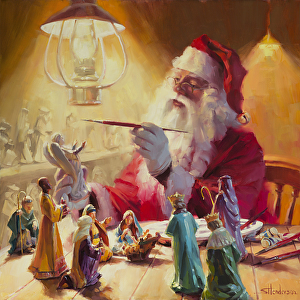
The little girl’s doll — and the little girl, and Santa as well — are calm, quiet, and peaceful. Christmas Story original oil painting by Steve Henderson; click on the image to watch the YouTube video of the painting being created.

If there were such thing as a Stressy Bessy doll, she would look like me.

The Son and Heir says that I focus on minutiae: “Remember when we vacationed on the beach and I wanted to climb those 25-foot rocks? You freaked out.

“I mean, really, if I’d fallen, I would have hit the sand — or the water, if the tide were in.”

College Girl focuses on driving situations: “Yeah, it was snowy and the car was slipping and sliding a little, but you’re going so slow on the highway because of the fog and the ice and the traffic, it’s not like you’d get really hurt or anything if you crashed. You’d just crunch up the car.”

There’s Only So Much That We Can Control

The Norwegian Artist has lived with me for years obsessing about the rising electric bill, the rising property tax bill, the rising health insurance premiums, the rising car tabs, the rising food prices — none of which are accompanied by rising wages.

Everything gets paid; everything works out; and there’s only so much that you can control, he points out.

She didn’t drop the angel, the tree didn’t fall down, Santa didn’t trip. The things we worry about often don’t happen. Little Angel Bright original oil painting; click on the image to see the YouTube video of how this painting was created.

So it was with relief that I joined four other women at a Christmas tea where one of them mentioned being unable to sleep at night because she was . . . stressing. She felt as if there were something wrong with her.

Immediately, we all dumped our collective stories and coping strategies in her lap.

“Do not attempt to analyze anything at 3 a.m.,” we advised. “Your analytical hormones or enzymes or chemicals or whatever shut down around 6 p.m., along with your body.”

“When life slaps you in the face, it stings. If you didn’t feel it you’d be a mannequin. That’s another word for a dummy.”

“It’s okay to ask God what the hell He’s thinking. If your husband can survive the question, so can God.”

I Don’t Stress about Christmas

Mercifully, the one thing I do not stress about and never have is Christmas.

Time out for good book (or list), some cookies, and the cat is an inexpensive, and worthy, stress reducer. The Christmas List, original oil painting by Steve Henderson. Click on the image to see all of Steve’s Christmas paintings on the Steve Henderson Fine Art website.

Crowded stores don’t bother me because I’m not in them.

We buy a limited number of reasonably priced gifts for a limited number of people and don’t worry about the rest of the world. Cheap? Throughout the year, I tip waitresses and hotel maids — because I know what it’s like to serve and clean; I don’t bother with the valet who parks the car because I’m married to him.

Parties are with friends who don’t own black sequined little black dresses or casual tuxes; we eat, laugh, and enjoy one’s company in December the same way we do in April. If we choose to gift one another it’s generally something sweet in a round tin, and there is no obligation to match, present for present. That’s why we’re friends.

Peace, Goodwill toward All, and No Stress

There is absolutely nothing about the Baby in the manger, the star over Bethlehem, or the shepherds in the fields that demand excessive spending, drinking, dressing, obsessing, wrapping, decorating, or stressing.

Given that, throughout the year, there are actual, verifiable things to stress about, it is counterproductive to take a holiday that promotes peace, grace, love, and goodwill toward men and turn it into something requiring psychoanalysis.

The most stressful thing about Christmas is that it is wrenchingly

Gifts don’t have to be elaborate to be meaningful. These Gifts Are Better Than Toys original oil painting by Steve Henderson. Click on the image to see the YouTube video of how this painting was created.

lonely for some. This, we can do something about, and it doesn’t require money, little black sequined dresses, or caloric canapes.

Time — the Ultimate Gift

It just takes time — the gift that costs no money, that heals all wounds, that marches inexorably on.

And at Christmas, this Time — which regularly consists of 24 hours in each day — can either speed up or slow down as we determine to fill it up with stress-inducing activities and obligations, or . . .

Stop. Just stop.

And breathe. Smile. Laugh. Love. Give. And give thanks.

Merry Christmas, everyone.

This article was originally published in 2010 by the author. The subject matter is timeless enough that I figured it was worth revisiting.

One of the biggest stresses in most people’s lives is money — or the lack of it. No matter what you make, you can learn to use it more wisely, and my book, Live Happily on Less, walks you through how to do this. Why not consider this as an early, inexpensive gift for yourself? Paperback $12.99, digital Kindle $5.99, borrow for free on AmazonPrime.

“Do not be anxious about anything, but in everything, by prayer and petition, with thanksgiving, present your request to God. And the peace of God, which transcends all understanding, will guard your hearts and your minds in Christ Jesus.” — Philippians 4:6-7

Posted in Art, blogging, Christmas, Culture, Current Events, Daily Life, Encouragement, Family, holiday, home, inspirational, Life, Lifestyle, News, Personal, santa, shopping, Uncategorized, YouTube | Tagged , , , | Leave a comment

Recipe: Chicken Noodle Casserole

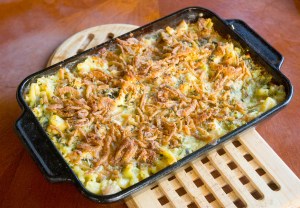
Do you see the crunchy munchy onions on top? Mmmmmm. Photo credit Steve Henderson Fine Art.

I made this dish because of a 24-ounce bag of French’s French Fried Onions that I fell in love with at Costco and simply had to have.

I was with the Son and Heir, whose level of thriftiness is such that he makes me look profligate, and his first question on seeing the bag was,

“Why do we need that?”

“It’s what you use to make that green bean casserole with.”

“I know the green bean casserole you’re talking about, and we’ve never had that in my life. You don’t even like canned green beans or mushroom soup, so what would inspire you to make the casserole?”

What an irritating kid.

But I’m the one with the checkbook so I tossed the bag of French fried onions in the cart, and when I came home, I made this casserole. On seeing it, the Son and Heir commented,

“This is delicious, but given that we eat casseroles once or twice a year, I’m thinking that you made this so that you could use the dried onions.”

Next month, I’ll take Tired of Being Youngest with me to Costco.

With joy and abandon, I flourished my way through Costco, French onions in hand. Jubilee, original oil painting by Steve Henderson; licensed open edition art print available at Great Big Canvas.

Whether you have the dried onions to put on top or not, this is a quick, fun casserole that tastes great on a cold evening, with the woodstove heating the house and the dog lurking in a corner hoping that no one wants to take a walk.

Chicken Noodle Casserole — serves 4 to 6

Ingredients:

1 1/2 cups dried pasta, any shape

2 cups cooked chicken (I used leftovers from the rotisserie chicken we picked up at Costco)

1/2 cup cheese, shredded (anything you’ve got in the fridge works for me)

2 stalks celery, chopped finely

3-4 leaves chard, ribboned (if you don’t have chard, you can use 1 cup of frozen peas instead)

6 tablespoons butter

1/4 cup flour

1/2 teaspoon salt

3 cups milk

1 cup French’s French Fried Onions (if you don’t have these, you can still make the casserole, but since the entire dish was developed around their existence, I really can’t leave them out)

Cook the pasta in water until it’s tender.

When you eat, sit down and take time, and be with one another. Afternoon Tea, original oil painting by Steve Henderson; licensed open edition print at Great Big Canvas.

While the pasta is cooking, melt the butter in a saucepan and saute the celery until soft, about 10 minutes. Add the chard, if you’re using it, and stir until it’s limp — 5 minutes or so. (If you’re using the peas, you’ll add them elsewhere, later.)

Stir the flour quickly into the chard/celery/butter mixture and then whisk in the milk and salt. Cook this white sauce over medium heat until bubbly and thickened, 10 minutes or so. Make sure to keep whisking the mixture so that it doesn’t stick on the bottom.

In a greased 9 x 13 pan, toss the noodles with the chicken and peas, if you’re using them. Pour the white sauce over and mix it all together. Sprinkle cheese across the top and — this is the MOST IMPORTANT PART — sprinkle on the French fried onions. Mmmmmm. Make sure to make up for what you snitch as you’re sprinkling.

Bake at 350 until bubbly and hot.

Enjoy the meal with a cup of hot tea and the company of your household, remembering that eating — which we do three times a day, average — is an opportunity to love, laugh, talk, share and be thankful.

Live Happily on Less — it’s really possible, and actually fun to learn how to do.

Remember, also, that cooking is one of the first, and easiest, means of being more independent and saving money, both of which are important in today’s economy. I talk about this in my book, Live Happily on Less, which I regularly recommend people look at, because it’s a simple, friendly way of learning how to use what you’ve got, better.

We have lived our entire lives, happily, on less, and it hasn’t stopped us from owning our home, outright and mortgage free; or driving a nice car for which we paid cash; or dressing decently, staying warm, and indulging in little luxuries like Polish pottery, volumes of books, and family vacations.

Paperback $12.99 (but generally on sale for less), digital and Kindle $5.99, borrow for free on AmazonPrime.

Posted in Art, blogging, cooking, Culture, Current Events, Daily Life, dinner idea, diy, Economy, Encouragement, Family, Food, frugal living, home, instruction, Life, Lifestyle, money, Motherhood, News, Personal, saving money, shopping, Uncategorized | Tagged , , , , | Leave a comment

Read the Article, Not Just the Title

By the time I get a text tapped out, spring’s blossoms have turned into autumn’s dried leaves. Blossom, original oil painting by Steve Henderson.

By contemporary standards, I am inept, because it takes me eight minutes to tap out a simple text on my ancient (two years?) Star Trek communicator fliptop phone.

My daughters laugh and laugh.

However, I do have a skill that predates 21st century technology, and it’s one that everyone, regardless of their technological toy arsenal, can — and should — get good at.

I read.

Specifically, when I’m on a social media site and I see a link to an article, like,

Praying for Miley, Britney, and Lindsay

I actually read the article, all the way through, before I share it or pass it on. Of course, in this particular case, I don’t have to read the article before sharing it since I wrote it, but before it was 45 seconds digitally live it garnered comments along the lines of:

“Amen! We need to pray for these precious young women.”

Well golly, Beave, that’s true, but it isn’t the point of the article. In our busy, frenetic lives, we are forgetting that headlines are designed to draw us into the story, not function as the article itself, but in a world of Tweets and Facebook posts, we are lulled into thinking that we can acquire knowledge, 140 characters at a time.

We really need to slow down and spend time with our thoughts. Gathering Thoughts, original oil painting by Steve Henderson; licensed open edition print at Great Big Canvas.

Many of us who do recognize that acquiring knowledge involves more than reading a headline fall into the bulletpoint trap, gravitating toward articles along the lines of,

  • 10 Surefire Ways to Get Your Boss Fired!
  • 7 Fabulous Techniques in Bed — and the Kitchen!
  • Have You Been Mugged? 6 Ways to Find out

My favorite was a variation of

  • 36 Things You Can Do with Dead Rhubarb Plants

with half of the bullet points saying, “I’ve never actually done this myself, but it sure looks like it would work!”

The only bullet point title I can remember doing is “Three Halloween No No’s for Christians.” Most of the time, my titles look like, “Should Christians Think?” or “People Call Us Stupid, You Know.”

And as much as I preen over the titles I give to the articles, I — and other writers — would really appreciate if people followed the links and read them, especially before passing them on.

Gardens are great places to learn. If you don’t like tomatoes, plant flowers. If you don’t have land, use a window box. Promenade, original oil painting by Steve Henderson; licensed open edition print at Great Big Canvas.

I recognize that I’m raving, within the process not too subtly managing to get a number of links to my articles drawn to your attention, but I mean this, people:

As the information, and disinformation, around us increases, we are becoming remarkably less able to process it, and we gain knowledge in a fragmented, bits and pieces manner. If we wanted to learn how to grow tomatoes, would we satisfy ourselves with a series of headlines —

Tomatoes are easy to grow

Even apartment dwellers can grow a tomato plant

Become more independent by growing what you can

Or would we buy, and read, a book or books; find, and peruse, online articles; and track down breathing human beings, who grow tomato plants, and ask them questions? At some point, we would actually plant a tomato plant, and it wouldn’t be on Farmville.

Technology’s cool — it opens the whole wide world up to us in a way that it wasn’t back when I was in second grade. But it also closes worlds, as we spend time digitally surfing, jumping from site to site to site, twitting instead of knitting.

As our economy continues to bedraggle itself out of bed, flopping back against the pillows in exhaustion, we who need to eat regularly every day have to solve our problems ourselves, and we don’t do that by being shallow, impatient, flutterbudgety, and online, all the time.

We need to know how to do actual, non-digital things, like grow tomato

Make subtle, realistic changes to your lifestyle to become more independent.

plants and cook the resulting fruit, and we learn this by doing.

Learning how to do things — anything — is a means of becoming more independent. The more independent you are, the less affected you are by circumstances around you. For example, in our erratic economy that goes down, up, down, and then sort of draggles along, if you know how do something as simple as cook your own food, you can save money on eating. If you know how to patch a garment, you will save money on clothing.

It’s basic, but it works. This attitude worked for our parents and grandparents during the Great Depression, and we can use it to work for us today. My book, Live Happily on Less, is a series of essays, like the one you just read, showing you how you can develop this attitude of independence, so that you can get by — better — on the resources that you have.

$12.99 paperback$5.99 digital at Amazon.com. Borrow for free on Amazon Prime. Also available at Barnes and Noble.

This article was originally published in ThoughtfulWomen.org.

Posted in Art, blogging, Culture, Current Events, Daily Life, Economy, Encouragement, Family, finances, frugal living, gardening, Green, Growth, home, inspirational, Life, Lifestyle, News, Random, saving money, self-improvement, success, technology | Tagged , , | Leave a comment

Homeschooling vs. Quality Products from the Public Sector

Public and private — there’s a difference between the two. Think of the world of art, for example. Eyrie, original oil painting by Steve Henderson, licensed open edition art print at Great Big Canvas.

The other day I purchased an item from a large public entity, and I had difficulty getting what I wanted.

The basic product, which has been having a history of problems lately because of a restructuring of the “business,” is not guaranteed to do what it is supposed to do. For five times the amount, I can purchase the upgraded product, which, as the sales associate told me, has a better chance of working, but there is no guarantee that it actually will. In order to get the guarantee, I need to spend 20 times the amount.

Very few businesses can stay afloat with questionable products and no guarantee, but if you’re the U.S. Post Office, you’re too big to fail (have you heard that one before?)

Because a number of processing centers in the state have closed and are in the (long, long) process of consolidating, there is no guarantee that a first class 9 x 12 envelope can make it to its destination by the “estimated by” date given. Over the last several months, during this agonizing transition, many of my mailings have been . . . late, so late, that when a client of ours wrote, 9 days after the estimated arrival time for the package I had sent her, the product was still 3 days away.

Who knows the places my packages have been before they arrive at their destination? Highland Road, original oil painting by Steve Henderson; licensed open edition print at Light in the Box.

By the estimated arrival date, the package had made it five hours away from where I had initially mailed it.

“What can you expect?” the clerk behind the counter said when I told her my tale of woe. “We’re the U.S. Government.”

Well yes, my expectations are low. The clerk’s however, were even lower. That’s not a happy thought.

Most of us are not particularly impressed by the products and services provided by our various governments — federal, state, municipal — and if you are a homeschooler, you have made a concerted decision to seek out a private contractor — you, your spouse, and your family — to provide educational services for your child or children.

Rare is the homeschooling family that has not been brought to task for choosing an alternative, and all of us have fielded questions along the lines of,

Parents have been, and always will be, a child’s first, and best, teacher. Beachside Diversions, original oil painting by Steve Henderson; licensed open edition print at Great Big Canvas.

“What makes you think that you are qualified to teach your child?”

or

“Do you think that you know more than a professional who has gone to school to learn how to teach children the subjects you are just bumbling through?”

To the first question, we always answered, “As university graduates of the system that you’re telling us to send our children to, we should have received the education necessary to effectively pass on knowledge. Did we waste our money?”

To the second: Why not? We read, we write, we question, we research, we discuss, we progress — learning is a lifelong process and intelligent, educated people never stop doing this. We teach our children to do the same.

Increasing numbers of people are looking at homeschooling because they don’t like the product they are seeing emerging from the public sector model, and/or they are uncomfortable with the rising level of control imposed by the school system on its studentry and parents. At home, you can carry a pocket knife. Or draw a gun. Or wriggle about in your seat without someone saying that you have Attention Deficit Disorder.

Students receive individualized attention, and there are no clamoring bells every 53 minutes. Customization, to a student’s learning process, is standard.

While it is true that homeschooling is not right for everyone (we always have to make these caveats, don’t we?), the opposite also applies: public school instruction is not right for everyone either. In a free society, parents make the choices that they feel are right for their children, and if a village is involved in the raising of them, the members of that village tend to be related to one another.

We need private alternatives to public entities. Otherwise, who knows when the Christmas packages we send out will actually get there?

Join me Thursdays for articles on Homeschooling, a lifestyle we

Paperback, digital, and AmazonPrime.

engaged in for 20 years, resulting in 4 grown, well-read, articulate young adults. My own specialty at the university was writing — a crucial skill in any society — and if this is something you are not comfortable with, I encourage you to look at my book, Grammar Despair: Quick, simple solutions to problems like, “Do I say him and me or he and I?”

Paperback $8.99digital $5.99 at Amazon.com, free to borrow on Amazon Prime.

“She really starts to shine when she gets on a roll discussing passive construction, and things we didn’t worry about 150 years ago, such as gender issues and online writing. ‘While online writing is relaxed, it is not buck-naked. . .’ just cracked me up! (See? It isn’t a sin to end a sentence with a preposition!)” — Amazon reader review

Posted in Art, blogging, children, Christian, Culture, Current Events, diy, Education, Encouragement, Family, grandparenting, home, homeschooling, inspirational, Life, Lifestyle, Motherhood, Parenting, school, self-improvement, success, Uncategorized | Tagged , , , | Leave a comment

Recipe: Simple Breaded Chicken

Isn’t that Polish pottery something else? So is the chicken. Photo credit Steve Henderson Fine Art.

In our house, boneless skinless chicken thighs or breasts are fast food, because they take 20-30 minutes to cook. I know. Chicken is mass produced and not under the best conditions, but I close my eyes and buy as natural and as minimally processed a product that I can.

Eating better, and healthier, in this society is a challenge, and it’s a step by step process.

Breaded Chicken is fast and easy, and in the photo above, you’ll notice that I made a meal of this with Yukon Gold French Fries and sauteed kale. It’s a messy photo, I know, and the colorfully patterned plate doesn’t help — but that’s my handcrafted Polish plate, and I love it. Birthdays and holidays the family checks out PolMedia, and bit by bit my collection grows. None of it matches, which is pretty much what my entire house looks like:

Fill your life with the things you enjoy, and free yourself from making everything match.

Those are your words of wisdom for the day, and now let’s get that chicken going:

Simple Breaded Chicken — serves four as the main component of an

Eating together — what an incredible gift that we can enjoy throughout our lives. Afternoon Tea, original oil painting by Steve Henderson; licensed open edition print at Great Big Canvas.

entree

Ingredients:

4 Boneless skinless chicken thighs, thawed

1/2 cup flour, in a bowl or bag

1 egg, beaten with 1 tablespoon of water

3/4 cup crackers or dried bread crumbs, crushed fine (I used Kirkland brand Ancient Grains Crackers from Costco)

One at a time, coat the chicken thighs with the flour; dip them in the egg mixture; and roll them in the crushed crackers. Some people, to keep their hands clean, use one hand to coat the chicken in flour and dip it in the egg mixture; they switch the chicken piece to the other hand to roll in the crackers. If find that, whether I use one hand or two, I get clumps of eggy crackers all over my fingers.

Place the breaded chicken pieces in a greased baking pan. Bake at 350 degrees for 15 minutes; flip each piece over and bake 15 minutes more. This is the same amount of time you’ll need for the Yukon Gold French Fries, so you get twice as much work out of your oven for the same amount of money it takes for the utilities to run it.

The chicken is done when it reaches an internal temperature of 165 — mine was nearing 200 degrees at the end of a half hour.

Cook for yourself. Cook For yourself. Cook for yourself. The first three steps to saving money.

That’s it. Do you see why I call boneless, skinless chicken fast food?

Join me Tuesdays for quick, simple, easy, inexpensive recipes. Cooking for yourself is one of the simplest, and easiest things you can do to save money — and in today’s economy, we’re all looking for ways to save money.

My book, Live Happily on Less — which regular readers know that I mention all the time — is a quick, simple, easy, and relatively inexpensive way to get on the right track of living a money saving life.

It doesn’t have to be complicated; it doesn’t have to be difficult; it doesn’t have to be something that makes to sense to you. Live Happily on Less walks you gently through the process, and it doesn’t make you feel stupid, overwhelmed, or paralyzed with fear.

$12.99 paperback$5.99 digital, free to borrow on AmazonPrime. At Amazon.com and Barnes and Noble.

“(Carolyn) offers personal examples, and sounds like a wise older sister or aunt or Mom who has learned by doing. She emphasizes that you have to figure out what works best for you.” — Amazon Reader Review

Posted in Art, blogging, cooking, Culture, Current Events, Daily Life, dinner idea, diy, Encouragement, Family, finances, Food, frugal living, health, home, Life, Lifestyle, News, Random, recipe, saving money, Uncategorized | Tagged , , , , | Leave a comment

Homeschoolers: Why Society Needs You, Desperately

Jammy time is fun time, whether we’re doing math problems or listening to a story from Santa. Christmas Story, art print from Steve Henderson Collections.

You wouldn’t think that people who let their kids study math, in jammies, at the dining room table, would be revolutionary giants, but you are.

Even if you’re one of those more, um, organized and slightly less relaxed families that set up a separate room, with school desks and no jammies allowed, you’re still an activist. You’re just not in people’s faces. The statements you make are quieter, more long-term ones that speak to others by your independently going about your life, making the decisions you do because they are the ones best for your family.

Now obviously, you don’t have to be a homeschooler to do this, but simply by virtue of being one of these odd, anti-social, going-against-the-norm people, you’re in the club. And in order to be a club member, this is what you do: you put your family first. That’s why you’ve likely sacrificed a second income (generally, mom’s), or cobble together one fulltime job between a husband and a wife, or if you’re single and playing both parts, work really hard, and really long hours, to make this work.

And you are rewarded, by society, by being called crazy. Or weird. Batty. Religious zealots. Uneducated. Non-conformist.

Now that last term: that’s a good one, and you want to wear it proudly.

You are the only unique you on the planet, and your quirky family is in a category all by itself. This is a good thing. Aphrodite, art print from Steve Henderson Collections.

In a nation that extols sliced, white commercial bread, because every loaf looks the same, you are the artisan loaf made from ancient whole grain flour and baked in the wood-fired brick oven. Every one of you looks slightly different, uniquely individual, yet similar in your goodness, wholesomeness, and good taste.

In the same way that healthy bodies don’t grow from a diet of sliced, white, commercial bread, healthy societies do not thrive in an environment where everyone is encouraged to think, talk, act, learn, and live in a prescribed, politically correct, imposed-from-the-top-down manner. A nation is not strong because its government is big and powerful, but because its people — and the families in which they interact — speak up, speak out, think for themselves, question convention, and go their own way when that way is best for them.

Never underestimate the inestimable value of reading. Provincial Afternoon, original oil painting by Steve Henderson, sold.

Undaunted by expert opinion saying that they are unqualified to do what they’re doing, parent teachers tackle math, foreign language, writing, science, physical education and computer literacy. Given that most parent teachers are graduates of at least high school, frequently higher education, it’s an interesting commentary that we don’t feel that they know enough to teach what they were taught themselves. Where is our collective confidence in our public education system?

You’re DIYers, and we all know that DIY is funky and cool. You have to figure out so many things for yourself: often learning first what you don’t know so that you can teach it, finding resources when this first aspect isn’t practicable. You are remarkably self-sufficient, and self-sufficiency, in any free, open society, is a positive quality.

That’s why we need you. You’re independent, self-sufficient, free. Theoretically, the United States was built upon those very concepts, and theoretically, they should be valued and sought after to this day.


Posted in Art, blogging, children, Christian, Culture, Current Events, Daily Life, Education, Encouragement, Faith, Family, frugal living, Growth, home, homeschooling, inspirational, Life, Lifestyle, News, Parenting, school, self-improvement, success, Uncategorized | Tagged , , , , | 1 Comment